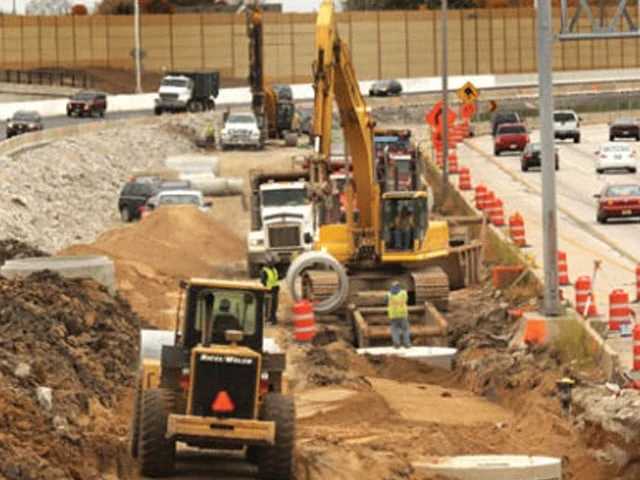
The Provincial Development Working Party (PDWP) has approved 21 development projects worth over Rs34 billion in Khyber-Pakhtunkhwa. The high-level meeting, chaired by Islam Zeb, Additional Chief Secretary of the Planning and Development Department, greenlit a range of initiatives aimed at urban rehabilitation, healthcare, and infrastructure. Under the Peshawar Revitalization Plan, more than Rs8 billion was sanctioned for the upgrade of 16 major arterial roads in the provincial capital. This move is expected to improve travel conditions significantly for citizens of Peshawar.
Two specific projects were approved during the 20th PDWP meeting to enhance and upgrade major Peshawar roads, promising safer, easier, and higher-quality travel for residents. These include improvements to ensure smoother traffic flow and better road maintenance in key areas of the city. In a significant development for healthcare, the forum approved the provision of dialysis services for kidney patients at seven District Headquarters (DHQ) hospitals across merged districts. The facilities will be established at DHQ hospitals in Khar (Bajaur), Miranshah (North Waziristan), Ghalanai (Mohmand), Parachinar (Upper Kurram), Wana (South Waziristan), Landi Kotal (Khyber), and Masty Mela (Orakzai).
This will provide essential medical services to underserved areas. Other approved projects include a comprehensive development package for Dera Ismail Khan district, along with the construction of tehsil buildings in Haripur, Shabqadar, Charsadda, and Bakka Khel (Bannu). These initiatives aim to improve local infrastructure and service delivery. Key schemes also encompassed the feasibility study and infrastructure development to upgrade the Pakistan Forest Institute to a degree-awarding institute.
Additionally, a feasibility study for the conservation of non-timber forest products through effective region-based protection measures was approved. These projects are expected to have a positive impact on both urban and rural areas in Khyber-Pakhtunkhwa, addressing critical needs such as healthcare access, improved infrastructure, and sustainable resource management.