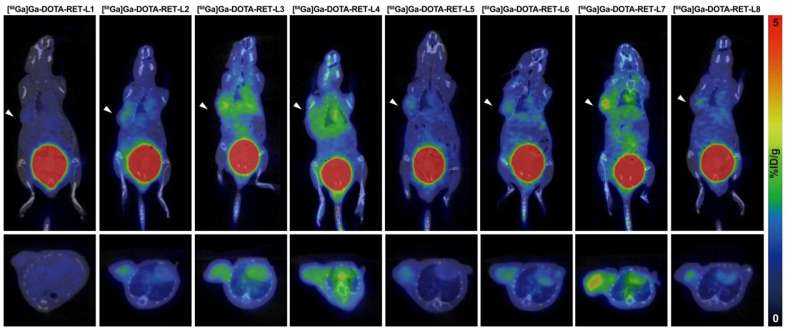
A novel theranostic approach targeting RET biomarker offers high-contrast PET imaging and safe treatment for neuroendocrine prostate cancer, an often visually challenging malignancy.
A groundbreaking theranostic approach that targets the RET (rearranged during transfection) biomarker has shown promise in both detecting and treating neuroendocrine prostate cancer. This highly aggressive form of prostate cancer is notoriously difficult to visualize with conventional imaging techniques such as PSMA-based methods, making it challenging for doctors to diagnose and treat effectively.
The new approach combines PET imaging with targeted therapy, allowing for high-contrast visualization of the disease. By specifically targeting RET, a biomarker recently identified in neuroendocrine prostate cancer, this method provides a critical alternative when conventional molecular imaging and PSMA-directed therapies are not suitable. This innovative technique was presented at the Society of Nuclear Medicine and Molecular Imaging 2026 Annual Meeting, highlighting its potential to revolutionize the diagnosis and treatment of this aggressive form of cancer.
The ability to accurately detect neuroendocrine prostate cancer through PET imaging is crucial for early intervention and effective treatment planning. By enabling precise localization of the disease, doctors can tailor their therapeutic strategies more effectively, potentially improving patient outcomes. This theranostic approach not only enhances diagnostic capabilities but also offers a safe and targeted treatment option that could significantly impact patient care.
The development of this RET-based method represents a significant advancement in the field of nuclear medicine and molecular imaging. As research continues to refine these techniques, it is hoped that they will become widely available, providing more accurate diagnoses and better treatment options for patients with neuroendocrine prostate cancer.