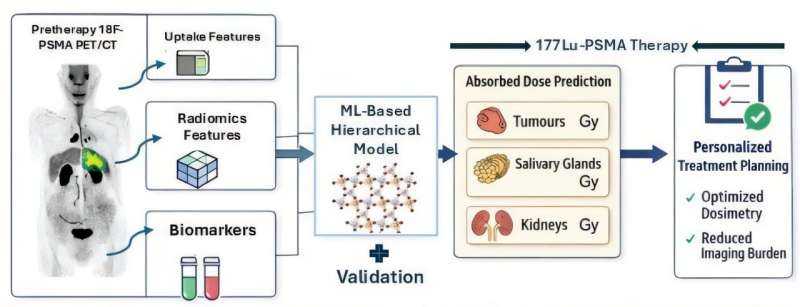
A groundbreaking machine-learning approach has been developed to predict the radiation dose to tumors and healthy organs in patients with advanced prostate cancer, prior to the initiation of therapy. This innovative tool utilizes data from pre-therapy PET/CT scans to estimate the radiation dose, which could significantly enhance the personalization of treatment plans for patients with metastatic castration-resistant prostate cancer (mCRPC).
The new approach focuses on prostate-specific membrane antigen (PSMA) treatment, a targeted therapy that has shown promising results in treating mCRPC. By analyzing the data from PET/CT scans, the machine-learning algorithm can identify patterns and correlations that may not be apparent to human observers, allowing for more accurate predictions of radiation dose and potential toxicity risks.
The potential benefits of this novel prediction tool are multifaceted. Firstly, it could enable healthcare professionals to personalize treatment plans for each patient, taking into account their unique characteristics and needs. This could lead to more effective treatment outcomes and improved patient outcomes. Secondly, the tool could help identify patients who are at high risk of toxicity, allowing for proactive measures to be taken to mitigate these risks.
The development of this AI-powered prediction tool is a significant step forward in the treatment of advanced prostate cancer. By leveraging the power of machine learning and data analysis, researchers and clinicians can work together to create more effective and personalized treatment plans, ultimately improving the lives of patients with mCRPC. As the field of oncology continues to evolve, it is likely that we will see further innovations in AI-powered diagnostic and therapeutic tools, leading to better patient outcomes and improved quality of life.
The future of prostate cancer treatment looks promising, with the integration of AI and machine learning playing a vital role in enhancing patient care. As researchers continue to refine and develop this prediction tool, it is likely that we will see significant advancements in the field, leading to improved treatment options and outcomes for patients with advanced prostate cancer. With the potential to reduce toxicity risks and improve patient selection, this novel approach is an exciting development in the ongoing quest to combat this devastating disease.