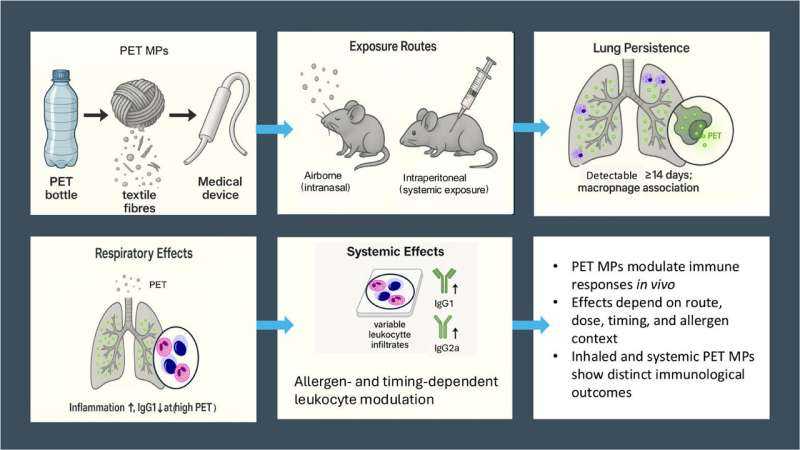
Microplastics have become a significant concern in recent years, with their impact on human health being a subject of intensive medical research. Despite the growing interest, the effects of microplastics on the immune system remain poorly understood. A recent study conducted by the Medical University of Vienna has shed some light on this issue, revealing that tiny particles of polyethylene terephthalate, a common type of microplastic, can have a profound impact on the lungs of mice.
The study found that when mice were exposed to polyethylene terephthalate particles, these tiny particles remained in their lungs, leading to an exacerbation of respiratory tract inflammation. This is a significant finding, as respiratory inflammation is a common symptom of many allergic reactions. The researchers also discovered that the presence of microplastics in the lungs altered the immune responses associated with allergies, which could have important implications for our understanding of the relationship between microplastics and allergic diseases.
The fact that microplastics can remain in the lungs of mice for an extended period is a cause for concern, as it suggests that similar effects could occur in humans. The study's findings are particularly relevant in today's world, where microplastics are ubiquitous and can be found in everything from food and water to air and soil. As the world grapples with the challenges posed by microplastics, studies like this one are essential for helping us understand the potential risks and consequences of exposure to these tiny particles.
The researchers behind the study are hopeful that their findings will contribute to a greater understanding of the impact of microplastics on human health. By exploring the effects of microplastics on the immune system, scientists can begin to develop new strategies for mitigating the risks associated with exposure to these particles. As the study's results demonstrate, even short-term exposure to microplastics can have significant effects on the immune system, highlighting the need for further research into this important area of study.
In conclusion, the study's discovery that microplastics can alter immune responses and exacerbate respiratory inflammation in mouse lungs is a significant step forward in our understanding of the potential health risks associated with these particles. As researchers continue to explore the effects of microplastics on human health, it is essential that we remain vigilant and take steps to minimize our exposure to these tiny particles, which are increasingly found in all aspects of our environment.