Scientists at Johns Hopkins Medicine used magnetic particle imaging to track cell therapy injections in mice, potentially paving the way for personalized treatment approaches.
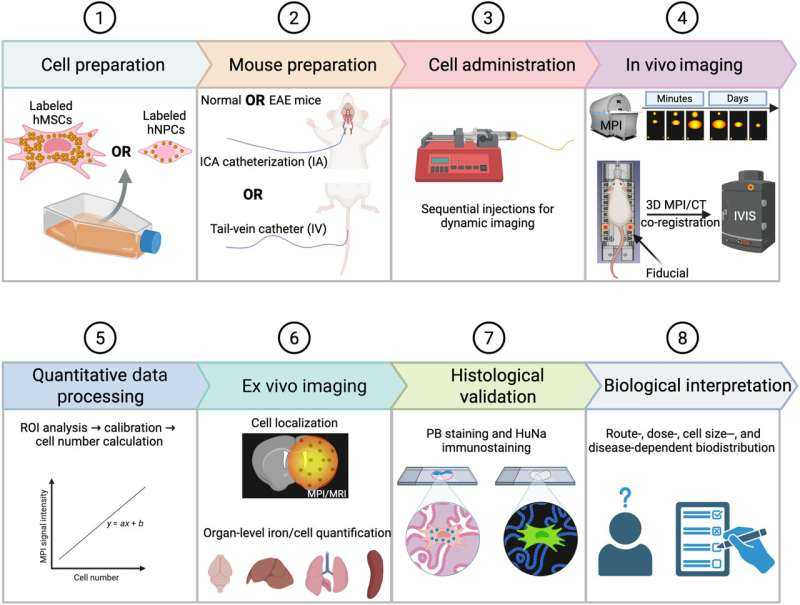
Scientists from Johns Hopkins Medicine have made significant strides in understanding how magnetic particle imaging (MPI) can revolutionize cell therapy treatments. In a recent study published in Science Advances, researchers utilized MPI to monitor the delivery of therapeutic cells during injection procedures commonly used for autoimmune diseases and cancers. This innovative technique allows scientists to visualize the cells as they are injected into the body, providing valuable insights that could lead to more personalized treatment strategies.
Traditionally, tracking cell therapy injections has been challenging due to limitations in current imaging technologies. However, MPI offers a promising solution by offering real-time visualization of therapeutic cells within the body. This breakthrough technology enables researchers to observe how these cells behave and integrate into tissues post-injection, which is crucial for optimizing treatment outcomes.
The study involved mice, where scientists injected therapeutic cells and used MPI to track their movement and distribution in real time. The results demonstrated that MPI could provide detailed information about cell behavior, potentially allowing doctors to adjust treatments based on individual patient responses. This personalized approach could significantly enhance the effectiveness of cell therapies by ensuring that the right number and type of cells are delivered precisely where they are needed.
While the findings from this mouse study are promising, further research is necessary before MPI can be widely applied in clinical settings. Nonetheless, these initial results suggest a bright future for MPI in the field of regenerative medicine and personalized healthcare. As researchers continue to refine this technology, it could transform how cell therapies are administered, ultimately improving patient outcomes and quality of life.
This advancement in imaging techniques not only enhances our understanding of cell therapy but also opens up new possibilities for treating various diseases through more precise and tailored approaches.