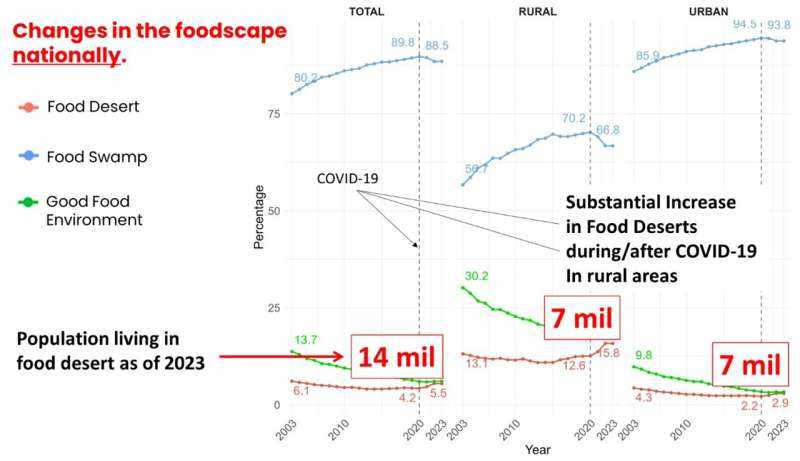
A new study reveals that while millions still live in food deserts, the number of food swamps has surged, raising concerns about access to healthy food options.
Imagine not having access to affordable, healthy food. For many Americans, it's a reality. According to a recent study by researchers at the American Cancer Society (ACS), between 2003 and 2023, nearly five million people in the United States lived in food deserts—areas with no grocery stores. These deserts are predominantly found in poor and rural areas, as well as places where public transit is limited, making it difficult for residents to access fresh produce.
At the same time, there has been a significant increase in the number of food swamps or areas characterized by an overwhelming presence of restaurants and fast-food outlets. This trend underscores the growing challenge faced by millions who struggle to find healthy eating options within their communities. The study highlights that while progress is slow, urgent action is needed to address this critical issue.
The findings are particularly concerning given the well-documented links between food insecurity and poor health outcomes. Without access to nutritious foods, individuals in these areas are at higher risk of developing chronic conditions such as diabetes, heart disease, and obesity. Moreover, the presence of food swamps exacerbates the problem by overwhelming communities with unhealthy choices.
Experts emphasize that addressing this dual challenge requires a multifaceted approach. This includes supporting local grocery stores, improving public transportation to ensure better access to fresh produce, and implementing policies that encourage healthier eating options in underserved areas. By working together, policymakers, community leaders, and businesses can help create more equitable food environments for all Americans.
In conclusion, while the number of people living in food deserts remains high, the expansion of food swamps presents a new and pressing issue. The urgent need to improve access to healthy foods cannot be overstated, as it directly impacts public health and well-being.