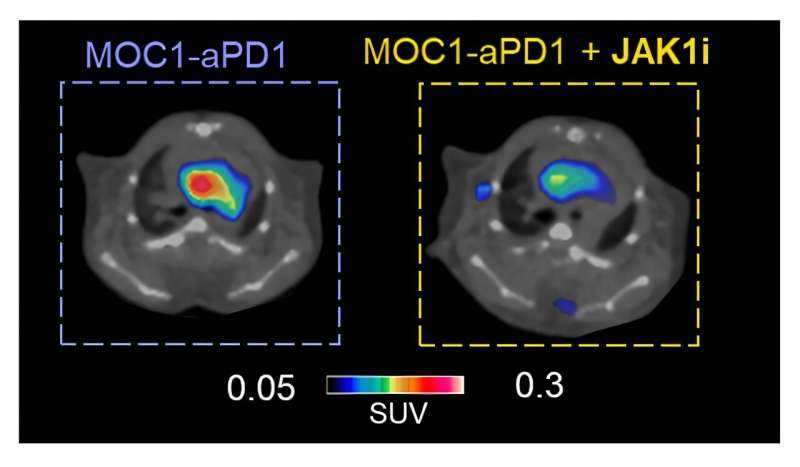
The use of positron emission tomography, or PET, imaging has revolutionized the field of cancer treatment by providing valuable insights into the progression of tumors and the body's response to therapy. Recently, a novel PET imaging approach has been developed that enables the simultaneous visualization of tumor progression and cardiac inflammatory responses during cancer treatment. This innovative strategy has the potential to significantly improve patient outcomes by allowing clinicians to tailor treatment plans to individual needs.
The new PET imaging approach involves the use of specialized tracers that can detect specific biomarkers associated with tumor growth and cardiac inflammation. By using these tracers, researchers can non-invasively monitor the progression of tumors and the development of cardiac inflammation in real-time. This information can be used to adjust treatment plans and minimize the risk of adverse effects.
Using this novel PET imaging approach, researchers have demonstrated the effectiveness of a new combination therapy that enhances tumor response while reducing cardiac inflammation. The combination therapy involves the use of a targeted cancer therapy in conjunction with a cardioprotective agent. The results of the study showed that the combination therapy was highly effective in reducing tumor size and minimizing cardiac inflammation, resulting in improved patient outcomes.
The development of this novel PET imaging approach has significant implications for the field of cancer treatment. By enabling the simultaneous visualization of tumor progression and cardiac inflammatory responses, clinicians can make more informed treatment decisions and develop targeted therapies that address the unique needs of each patient. Further research is needed to fully explore the potential of this innovative approach, but the initial results are promising and suggest a new era in personalized cancer treatment.
The ability to non-invasively monitor tumor progression and cardiac inflammation in real-time has the potential to revolutionize the field of cancer treatment. With the use of this novel PET imaging approach, clinicians can develop more effective treatment plans that minimize the risk of adverse effects and improve patient outcomes. As research continues to advance in this area, it is likely that we will see significant improvements in cancer treatment and patient care.