Researchers at Karolinska Institutet have discovered that microglia, the brain’s immune cells, may accelerate the spread of aggressive diffuse midline gliomas in children by producing fibronectin. The findings are published in Cell Death & Disease.
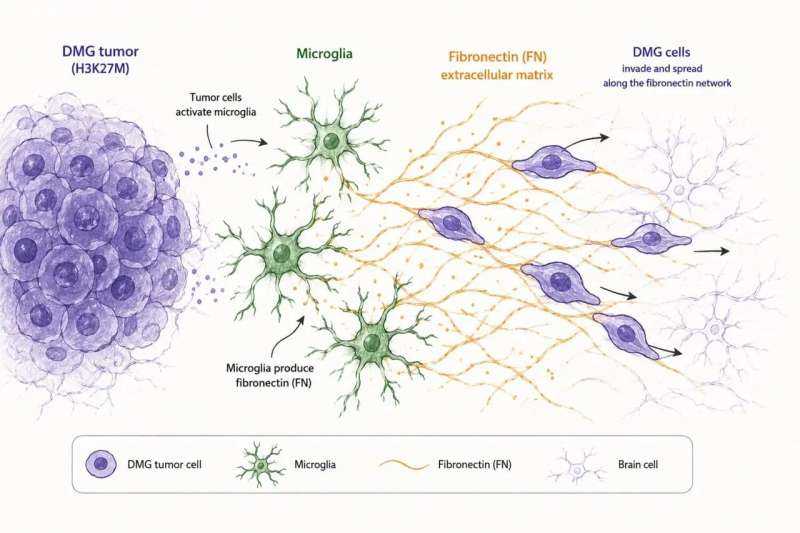
Researchers at the Institute of Environmental Medicine (IMM), part of Karolinska Institutet, have uncovered a potential mechanism behind the rapid spread of the highly aggressive brain tumor known as diffuse midline glioma (DMG). According to their study, which was published in the journal Cell Death & Disease, microglia – the brain's own immune cells – play a significant role in enhancing the invasive capabilities of these tumors.
The research team found that microglia produce fibronectin, a protein that creates an environment conducive to tumor invasion. This discovery sheds light on why DMG can spread so quickly and aggressively within the brain tissue, posing a significant challenge for treatment.
Lead researcher Dr. Maria Andersson explains, "Our findings suggest that targeting the production of fibronectin by microglia could be a promising therapeutic approach to slow down or even prevent the spread of these tumors in children."
Diffuse midline gliomas are particularly challenging due to their location and aggressive nature. They often affect young patients and have a poor prognosis, making this new insight crucial for developing more effective treatment strategies.
The study involved analyzing samples from DMG patients and conducting experiments on cell cultures and mouse models. The results demonstrated that fibronectin produced by microglia creates a supportive environment for tumor cells to migrate and invade surrounding brain tissue.
Dr. Andersson adds, "Understanding the role of microglia in tumor invasion opens up new avenues for developing targeted therapies that can disrupt this process. This could potentially improve outcomes for children suffering from these devastating tumors."
The findings have significant implications for future research and clinical practice. They highlight the importance of considering the interaction between immune cells and cancer in developing more effective treatment strategies.
In conclusion, this groundbreaking study provides critical insights into the mechanisms behind the rapid spread of diffuse midline gliomas, offering hope for new therapeutic approaches that could improve patient outcomes.