A new study uncovers the brain circuit that connects memory with hearing, explaining how learned sounds influence our responses.
A groundbreaking study has shed light on the intricate connection between memory and hearing in the brain. Researchers have identified a specific circuit that links short-term memories to auditory processing areas, revealing how learned sounds guide our behaviors effectively. This discovery could have significant implications for understanding and treating conditions related to memory and sensory processing.
Traditionally, it was believed that short-term memories are formed deep within the brain structures such as the hippocampus. However, little is known about how and where in the brain this information is stored or accessed when needed. A perfect example of this is recognizing a car horn's warning sound. Most people can identify it instantly, even though not all horns produce the same sound and the situations in which they are heard vary widely.
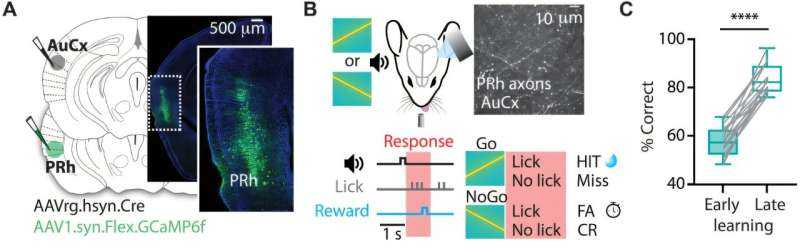
This study provides insights into the mechanisms that enable us to recognize and respond appropriately to learned sounds. The researchers found that certain neurons in the brain's auditory cortex are activated when we hear a familiar sound, such as a car horn. These neurons then communicate with memory centers like the hippocampus, allowing us to recall relevant information quickly and apply it to our actions.
The findings suggest that this circuit is crucial for linking sensory input with stored memories, enabling rapid and effective responses in various scenarios. This could have important applications in fields ranging from neuroscience to clinical psychology, where understanding how learned behaviors are formed and maintained is essential.
By uncovering the neural pathways involved in connecting memory and hearing, scientists can now explore new avenues for treating conditions such as auditory processing disorders or memory-related cognitive impairments. The study opens up possibilities for developing targeted therapies that could improve our ability to process and respond to sounds in daily life.