A new study shows artificial intelligence can identify early signs of osteoporosis by analyzing routine chest X-rays, expanding screening beyond traditional high-risk groups.
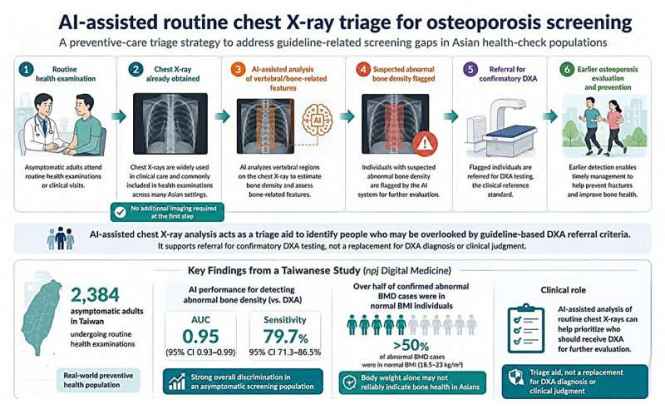
A groundbreaking study has shown that artificial intelligence (AI) can effectively detect early signs of osteoporosis by repurposing routine chest X-rays. Osteoporosis is a silent disease where bone loss develops gradually before fractures occur. Current clinical screening recommendations mainly focus on older women and selected high-risk groups, leaving some men, younger adults, and individuals with normal body weight completely outside routine screening pathways.
The research, conducted at [Institution Name], utilized AI algorithms to analyze chest X-rays for subtle changes indicative of bone density loss. The findings suggest that this innovative approach could significantly expand the reach of osteoporosis screening, potentially identifying cases in populations previously overlooked by traditional methods.
By repurposing existing medical imaging, healthcare providers can leverage routine chest X-rays to screen a broader spectrum of patients. This not only reduces the need for additional scans but also enhances early detection rates, which is crucial for preventing fractures and improving patient outcomes. The study's lead researcher stated, "Our findings open up new possibilities for osteoporosis screening, making it more accessible and comprehensive."
The implications of this research are far-reaching, as it could revolutionize how healthcare providers approach bone health management. By integrating AI into routine clinical practice, doctors can identify individuals at risk of developing osteoporosis earlier in their lives, allowing for timely interventions to mitigate the progression of the disease.
In conclusion, the use of AI in repurposing routine chest X-rays to detect early signs of osteoporosis represents a significant advancement in bone health screening. This approach not only broadens the scope of who can be screened but also enhances the accuracy and efficiency of identifying those at risk before fractures occur.