Sindh launches a multi-billion-rupee expansion project at Jinnah Sindh Medical University aimed at enhancing educational infrastructure in the province.
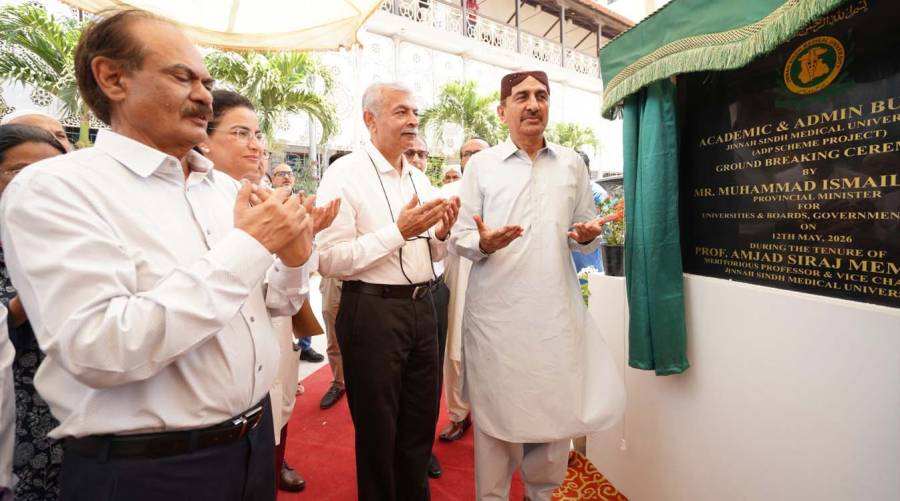
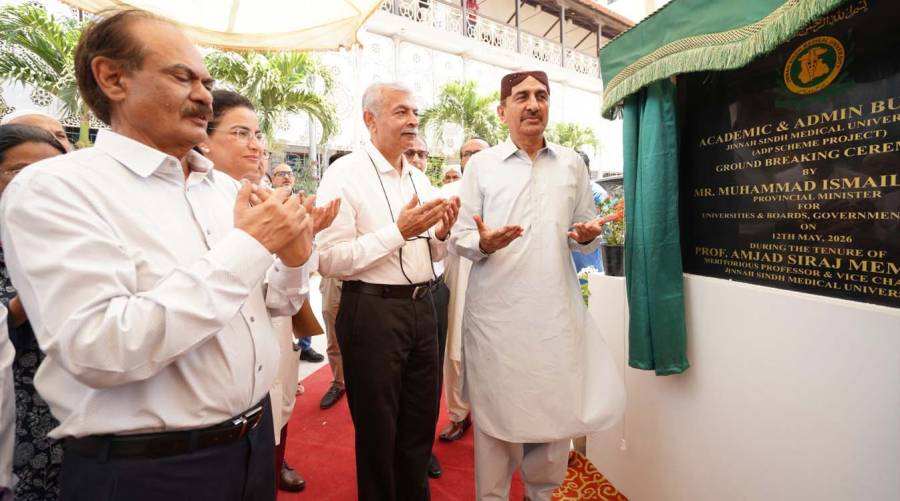
KARACHI: In a significant move to strengthen medical education and research facilities, Jinnah Sindh Medical University (JSMU) on Tuesday officially inaugurated the construction of new academic and administrative buildings under a multi-billion-rupee expansion project. The groundbreaking ceremony was inaugurated by Muhammad Ismail Rahoo, Sindh Minister for Universities and Educational Boards, who formally initiated construction work at the university campus in Karachi. The event was attended by Prof. Dr. Amjad Siraj Memon, Vice Chancellor of JSMU, senior faculty members, university officials, and representatives from the higher education sector.
Addressing the ceremony, Muhammad Ismail Rahoo announced that the development project carries an estimated cost of Rs2.86 billion and will be completed within three years. According to the minister, the project includes a 11-storey Academic and Administration Block comprising two modern buildings designed to enhance teaching, research, and student facilities at the university.
The infrastructure plan includes: Smart classrooms and computer laboratories Research halls and academic workspaces Physiotherapy facilities Student gymnasium and indoor sports areas Administrative offices and support facilities
Prof. Dr. Amjad Siraj Memon, Vice Chancellor of JSMU, revealed additional details of the project, highlighting that the first floor of the new complex will house an 800-seat state-of-the-art auditorium designed for academic conferences, seminars, and university events. He further announced that a modern library with a seating capacity for 500 students will be established on the second floor to support research and learning activities.
The vice chancellor also disclosed plans for a separate five-storey multipurpose building dedicated to nursing and midwifery education, equipped with advanced laboratories, lecture halls, and specialized teaching facilities. According to university officials, the new infrastructure aims to help JSMU align itself with international academic standards and improve opportunities for medical, nursing, and allied health sciences students.
University leadership emphasized that the expansion project is expected to significantly boost academic productivity, medical research capacity, and healthcare training standards. Prof. Dr. Amjad Siraj Memon stated that the new facilities would not only strengthen academic and research activities but also provide students and faculty members with globally competitive learning environments.
Healthcare education experts say investment in modern teaching infrastructure has become increasingly important for Pakistan's public sector medical universities amid rising student enrollments, technological advancements, and growing demand for specialized healthcare professionals. Sindh government highlights investment in higher education
During his address, Minister Muhammad Ismail Rahoo said the Sindh government continues to prioritize universities and hospitals through increased development funding and institutional support. He stated that improvements in Sindh's higher education and healthcare sectors are helping enhance university rankings and attract students and patients from across Pakistan.
Speaking at the event, Dr. Nighat Shah assured that the university administration would closely monitor the construction timeline to ensure completion within the proposed three-year period. The ceremony was also attended by Dr. Azam Khan along with faculty members and administrative officials.
JSMU enters a new phase of institutional development
The groundbreaking ceremony marks the beginning of what university officials describe as a transformative phase for Jinnah Sindh Medical University, as the institution continues to expand its role in medical education, research, and healthcare training in Pakistan. Education analysts note that infrastructure-focused investments in public medical universities are increasingly being viewed as essential for improving healthcare delivery, strengthening research output, and addressing the country's growing medical workforce needs.