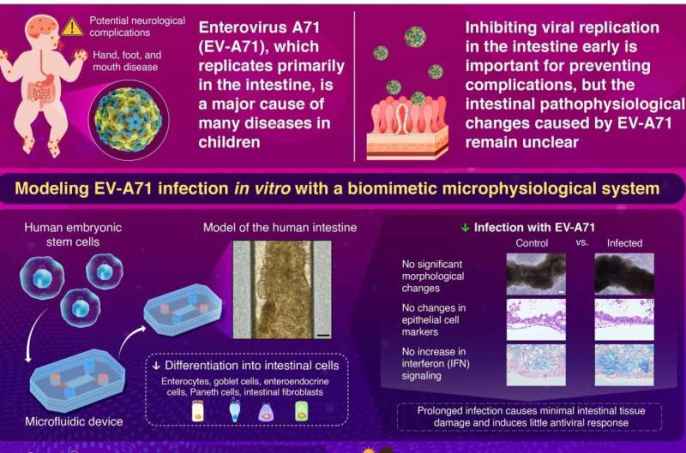
Scientists have made a significant breakthrough in understanding enterovirus A71 infection by recreating it in a novel, miniaturized model of the human intestine. This innovative platform, developed by researchers from Science Tokyo, has successfully replicated long-term EV-A71 infection, providing valuable insights into the virus's behavior in the human body.
The human intestine is a complex and challenging environment to replicate, but the researchers' biomimetic model has proven to be a game-changer in the study of EV-A71 infection. By using this model, the team has been able to shed light on how the virus grows and thrives in the intestine without triggering a strong immune response, a crucial aspect of EV-A71 infectious diseases.
The findings of this study, published in the Journal of Virology, have significant implications for the development of effective treatments for EV-A71 infections. EV-A71 is a highly contagious virus that can cause a range of diseases, from mild to severe, and understanding how it interacts with the human intestine is essential for creating targeted therapies.
The researchers' use of a miniaturized, biomimetic model of the human intestine has opened up new avenues for research into EV-A71 infection and its treatment. This platform allows for the precise control of experimental conditions, enabling scientists to study the virus's behavior in a highly realistic and controlled environment. As a result, the team has gained a deeper understanding of the complex interactions between EV-A71 and the human intestine, paving the way for the development of more effective treatments for this debilitating disease.
The study's results are a testament to the power of innovative research and the importance of continued investment in scientific inquiry. By pushing the boundaries of what is possible in the laboratory, scientists can gain a deeper understanding of complex biological systems and develop new treatments for some of the world's most pressing health challenges. As research into EV-A71 infection and its treatment continues to evolve, it is likely that this miniaturized model of the human intestine will play a key role in shaping our understanding of this virus and its interactions with the human body.