
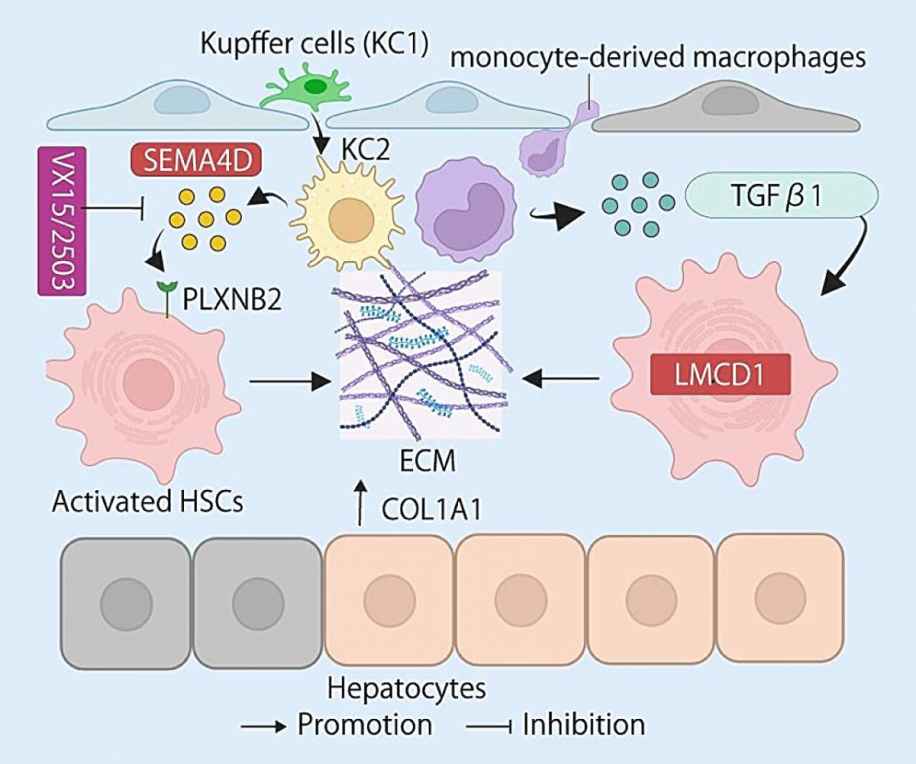
Scientists have identified two proteins, SEMA4D and LMCD1, that drive liver fibrosis. Treatment with antibodies against these targets significantly reduces fibrosis in mice and human patients.
Scientists from Osaka Metropolitan University have made a significant breakthrough by identifying two key proteins responsible for liver fibrosis—SEMA4D and LIM and cysteine-rich domains 1 (LMCD1). Their findings, published in JHEP Reports, offer new hope for treating this debilitating condition. The research team used single-cell fixed RNA profiling (FLEX) to analyze gene activity across various stages of liver fibrosis in mice.
The study revealed that hepatocytes in the pericentral zone show a remarkable restoration of their normal gene activity during recovery from fibrosis. This discovery suggests that these specific hepatocyte populations play an active role in driving liver regeneration, providing new insights into how the organ heals itself. Additionally, SEMA4D and LMCD1 were identified as critical therapeutic targets.
SEMA4D is secreted by monocyte-derived macrophages during fibrosis, acting as a "distress signal" that activates hepatic stellate cells and promotes collagen production. The researchers found that treating mice with VX15/2503, an antibody that blocks SEMA4D, significantly reduced fibrosis. Moreover, elevated levels of SEMA4D were detected in human liver biopsies from patients with advanced fibrosis, correlating with a lower risk of liver cancer progression.
LMCD1 operates as an internal "master switch" inside hepatic stellate cells, keeping them in an active state that drives fibrosis. Its expression is highly elevated during fibrosis and suppressed during regression. Silencing LMCD1 reduced fibrotic protein production, while overexpression had the opposite effect, driven by the AKT/mTOR signaling pathway.
The findings were further supported by human liver biopsy samples, where both proteins showed high levels in advanced fibrosis cases, correlating with disease severity across fatty liver disease and hepatitis C patient cohorts. The researchers believe that targeting these two molecules could lead to the development of a combination therapy for antifibrotic treatment.
"Finding these two targets points toward a combination antifibrotic therapy that attacks fibrosis from multiple angles simultaneously," co-corresponding author Associate Professor Le Thi Thanh Thuy emphasized. "The goal is not just to slow scarring down, but to actively stop it and push the liver toward recovery."
These results suggest that by targeting SEMA4D and LMCD1, patients may be able to reduce fibrosis progression and potentially prevent liver cancer development. The team's work could pave the way for future clinical trials aimed at developing effective treatments for liver fibrosis.
As research continues, identifying these specific molecular drivers of liver fibrosis opens up new avenues for therapeutic intervention, offering hope for millions suffering from this condition.


