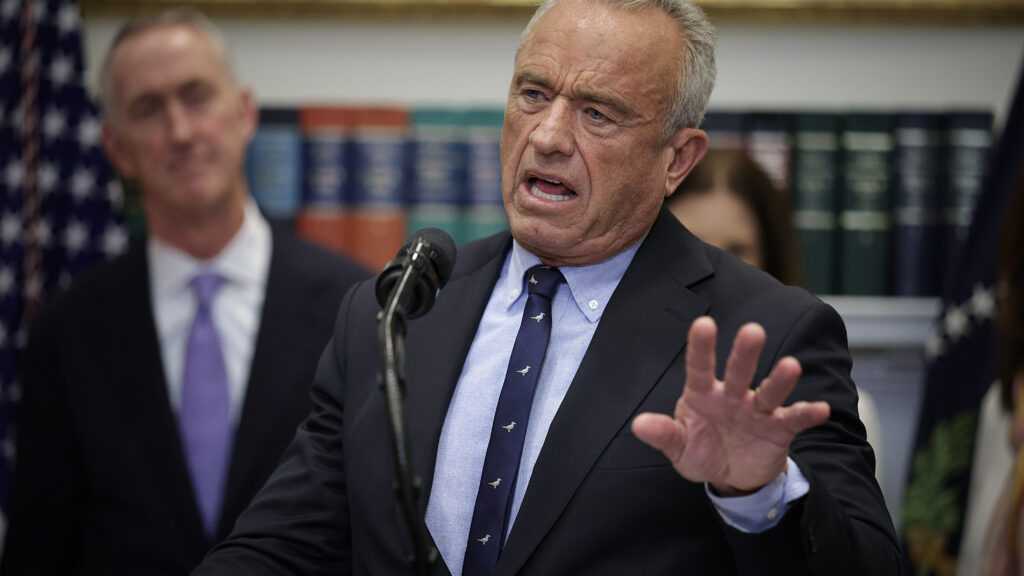
Robert F. Kennedy Jr., Trump’s health secretary, has spent his first year crisscrossing America. Now, as he enters his second term, the focus is shifting away from vaccine distribution to addressing vacancies in key positions.
Robert F. Kennedy Jr., appointed by President Donald Trump as Secretary of Health, has completed his first half-year in office. During this time, RFK Jr. has been actively involved in various health initiatives across the country. He visited a regenerative farm in Ohio, met with Wisconsin dairy farmers, and witnessed advanced medical procedures at the Cleveland Clinic. These visits underscored his commitment to promoting alternative health practices and modern medical technologies.
As RFK Jr. steps into his second year as America’s health czar, however, the focus is shifting. The initial enthusiasm around vaccine distribution has given way to concerns about vacancies in key positions within the department. Reports indicate that several critical roles remain unfilled, potentially hampering the effectiveness of ongoing health initiatives. This shift highlights the challenges faced by RFK Jr.’s administration in maintaining continuity and achieving its goals.
The political landscape also poses additional hurdles for RFK Jr. Amidst ongoing investigations into his personal affairs, including a recent insider trading probe involving former New York congressman George Santos, RFK Jr. finds himself under increased scrutiny. These developments could further complicate his ability to effectively lead the department during this critical period.
As RFK Jr. navigates these challenges, stakeholders in the health sector are closely watching for signs of progress and stability. The coming months will be crucial as he addresses both internal staffing issues and external political pressures. Only time will tell how well RFK Jr. can manage these complexities to ensure a robust and effective health policy framework.
In conclusion, while RFK Jr.’s first year was marked by active engagement in various health initiatives, the second year brings new challenges, particularly with vacancies in key positions. The success of his tenure will depend on his ability to overcome these obstacles and maintain momentum in advancing health policies.