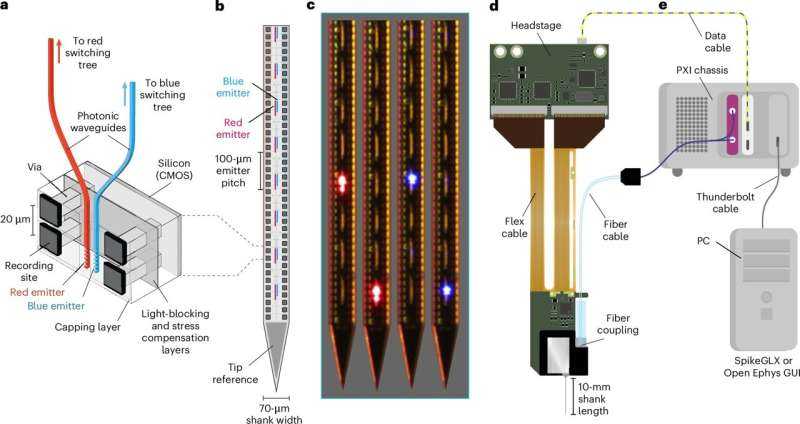
Scientists at UCL have co-developed a groundbreaking brain probe that can record and manipulate deep-brain neuron activity, offering new insights into neural circuits and neurological conditions.
A significant breakthrough in neuroscience has been achieved with the development of a tiny brain probe that can simultaneously record and manipulate neuron activity deep within the brain. This innovative technology, co-developed by scientists at University College London, has the potential to revolutionize our understanding of neural circuits and shed new light on neurological conditions such as Alzheimer's disease and schizophrenia.
The brain probe is a major advancement in the field of neuroscience, as it enables researchers to measure and manipulate deep-brain neurons in real-time. This capability will allow scientists to gain a deeper understanding of how neural circuits function and how they are affected by various neurological conditions. By manipulating neuron activity, researchers can also test new treatments and therapies for a range of brain disorders.
The development of this technology is a significant step forward in the quest to understand the complexities of the human brain. Neurological conditions such as Alzheimer's disease and schizophrenia are complex and multifaceted, and a deeper understanding of the underlying neural circuits is essential for the development of effective treatments. The brain probe offers a powerful tool for researchers to explore these conditions and to develop new therapies.
The potential applications of this technology are vast, and scientists are eager to explore its possibilities. By combining the brain probe with other cutting-edge technologies, researchers may be able to develop new treatments for a range of neurological conditions. The breakthrough also highlights the importance of continued investment in scientific research, as it has the potential to transform our understanding of the brain and to improve the lives of millions of people around the world.