
Mayo Clinic researchers identify ST8Sia6 molecule as a key player in regulating immune activity in the gut, potentially explaining treatment resistance in inflammatory bowel disease patients.
Researchers at the Mayo Clinic have made a significant discovery in the field of inflammatory bowel disease (IBD), identifying a molecule that may help explain why some patients do not respond to commonly used therapies. The molecule, known as ST8Sia6, plays a crucial role in regulating immune activity in the gut and may represent a distinct biological pathway from those targeted by existing treatments.
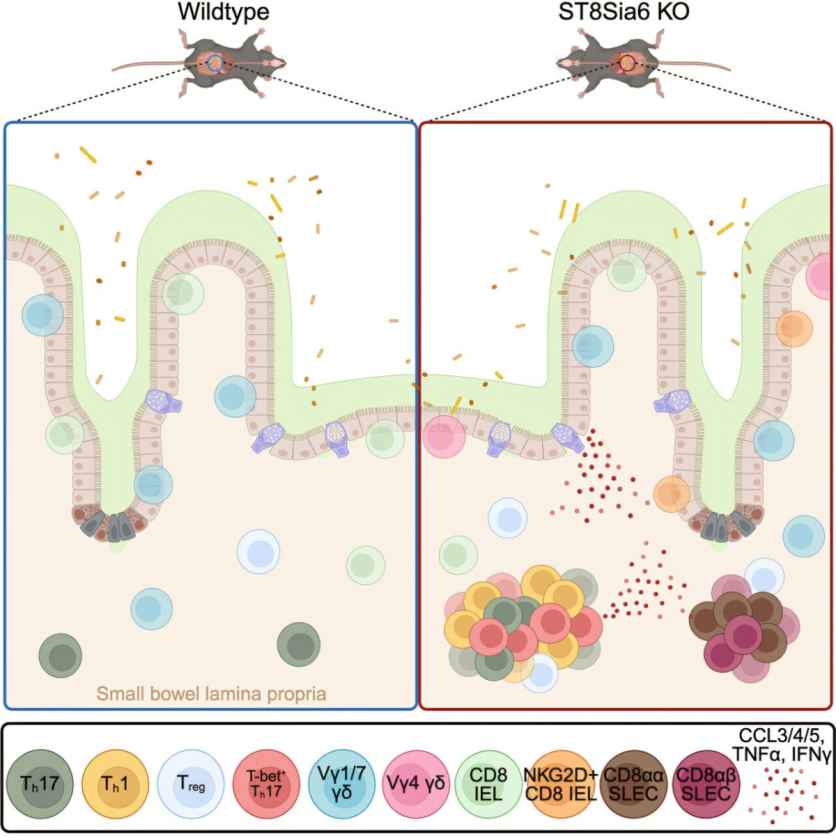
In preclinical models, the absence of ST8Sia6 led to a marked increase in inflammatory immune cells in the intestines, suggesting that the molecule is essential for maintaining immune balance. The findings, published in Cell Reports, describe a previously uncharacterized role for ST8Sia6 in regulating immune activity in the gut. This discovery has significant implications for the treatment of IBD, which affects nearly 3 million people in the United States and is characterized by chronic inflammation of the digestive tract.
The study was led by Virginia Shapiro, Ph.D., a Mayo Clinic immunology researcher, who notes that the normal function of ST8Sia6 in the gut had not been previously described. "We found that ST8Sia6 regulates the abundance of immune cells and keeps them in a steady state of homeostasis," she explains. "When the molecule is not present or is reduced, the presence of inflammatory immune cells increases dramatically." This increase in inflammatory immune cells can lead to the development of symptoms such as diarrhea, bloating, and bloody stools, which are characteristic of IBD.
The discovery of ST8Sia6's role in IBD is a significant breakthrough, as it may provide a new avenue for the development of treatments for the disease. Currently, medications that target a pro-inflammatory molecule known as TNF-alpha are used to reduce the autoimmune response in the intestines and alleviate symptoms. However, these treatments are not effective in all patients, and the discovery of ST8Sia6 may help explain why. According to Sydney Crotts, a graduate student at Mayo Clinic Graduate School of Biomedical Sciences and first author of the study, "We think this might be a model of what's happening in patients with Crohn's disease who have a baseline of immune cells and are basically fine until they encounter a trigger and have a flare."
The study's findings are the result of a collaborative effort between researchers at the Mayo Clinic, who used preclinical models to investigate the role of ST8Sia6 in IBD. The team found that the absence of ST8Sia6 led to an increase in inflammatory immune cells in the intestines, which was not alleviated by TNF-alpha medication. This suggests that the ST8Sia6 pathway may be distinct from those targeted by existing treatments and may provide a new approach to treating IBD.
The discovery of ST8Sia6's role in IBD is a significant step forward in the understanding and treatment of the disease. Further studies will be necessary to move the discovery toward the clinic, but the findings provide a new avenue for the development of treatments for IBD. As Crotts notes, "These findings mean researchers have an approach to better understand the source of TNF-resistant Crohn's disease, the pathways and molecules involved, and now may be able to develop additional ways to intervene to treat this disease." The study's results have significant implications for the treatment of IBD and may ultimately lead to the development of new and more effective therapies for the disease.


