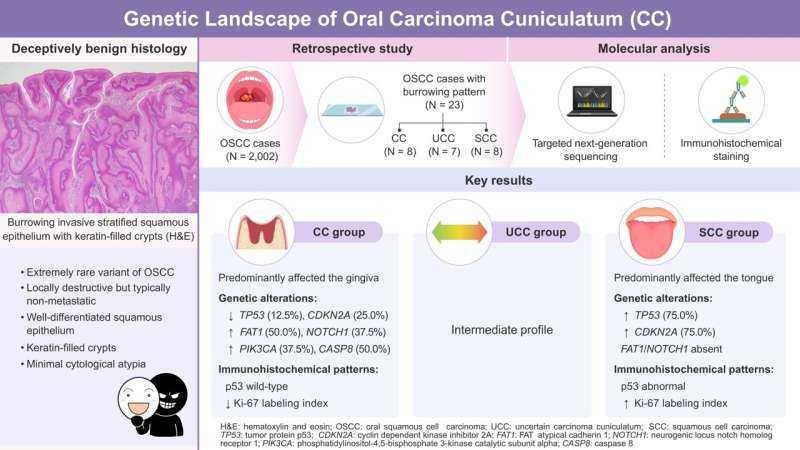
A new study identifies a unique genetic profile of rare burrowing oral cancer, paving the way for earlier and more accurate diagnoses.
A recent breakthrough in oncology research has identified a distinct genetic profile associated with a rare form of oral cancer known as 'burrowing' oral squamous cell carcinoma (OSCC). This discovery holds significant promise for improving early diagnosis and treatment outcomes. Traditional OSCC can sometimes present symptoms similar to benign conditions such as gum disease or oral infections, making it challenging to diagnose promptly. Delayed diagnosis often results in more advanced stages of the cancer, complicating treatment.
The identification of this unique genetic marker could lead to the development of new diagnostic tools that can accurately distinguish between benign and malignant oral lesions at an early stage. This advancement is crucial as timely intervention significantly improves patient outcomes. Researchers have the 'burrowing' variant of OSCC often presents with more aggressive behavior, burrowing into surrounding tissues, which further complicates its diagnosis.
The genetic profile identified in this study provides a clearer understanding of the molecular mechanisms underlying this rare form of cancer. This knowledge can be used to develop targeted therapies and personalized treatment plans for patients diagnosed with 'burrowing' OSCC. Moreover, it may also help in developing non-invasive screening methods that could detect early signs of the disease before symptoms become apparent.
In conclusion, the identification of a distinct genetic profile for rare burrowing oral cancer marks an important step forward in the fight against this challenging form of cancer. Early and accurate diagnosis remains critical to improving patient outcomes, and this new research brings us closer to achieving that goal through advanced diagnostic tools and targeted therapies.