
A new study from University of Malaga proposes a dual antiviral strategy against SARS-CoV-2, combining peptides and a mutagenic compound to destabilize the virus and hinder its replication.
A recent study led by researchers at the University of Malaga has proposed an innovative approach to combat SARS-CoV-2 using a paired antiviral strategy. The research, published in Antimicrobial Agents and Chemotherapy, demonstrates how two complementary treatments can work together to significantly reduce viral load and genetic diversity, ultimately leading to near-complete loss of infectivity.
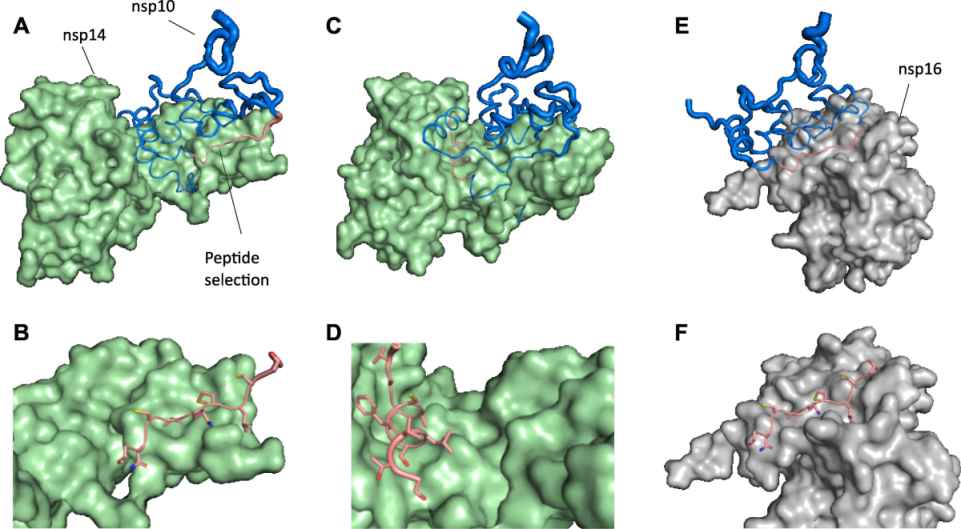
The study focuses on designing small peptides that target specific interfaces within the SARS-CoV-2 virus, including nsp10-nsp14 and nsp10-nsp16. These peptides are engineered to block key viral proteins involved in replication and immune evasion. Additionally, a compound called 5-fluorouracil is used to introduce errors during viral genome replication.
Ana Grande, Professor at the Department of Cell Biology, Genetics and Physiology, explains that when these two mechanisms are combined, they produce an enhanced synergistic effect. The peptides hinder viral replication while the mutagenic compound increases mutation rates within the virus, pushing it towards a state known as "error catastrophe." This results in near-complete loss of infectivity.
According to Grande, this dual action not only reduces the viral load but also alters its genetic diversity significantly. By destabilizing the viral population and facilitating its extinction, the treatment effectively combats SARS-CoV-2's ability to replicate efficiently and adapt to new variants.
The research team from the University of Malaga collaborated with researchers from IBIMA Platforma BIONAND, Hospital Universitario Virgen de la Victoria, IDIBE-Universidad Miguel Hernández, Severo Ochoa Molecular Biology Center (CSIC-UAM), Universidad Autónoma de Madrid, and Fundación Jiménez Díaz. This multidisciplinary approach allowed the problem to be approached from various perspectives, including computational design and experimental validation.
The study's findings suggest that this combined treatment could have broader applications in developing broad-spectrum antivirals due to the highly conserved viral proteins targeted by the peptides. The researchers are currently pursuing further research and have applied for a patent to protect their therapeutic approach, aiming to facilitate its transfer and future development.
This innovative strategy represents a significant step forward in combating SARS-CoV-2 and offers hope for more effective treatments against emerging viruses.


