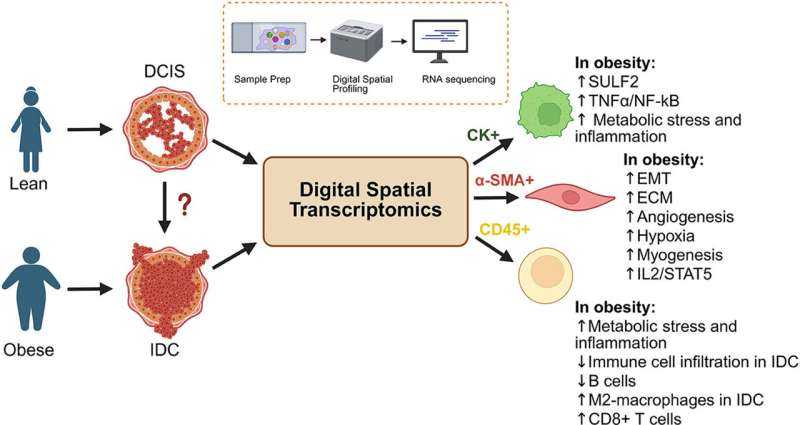
A new study from the University of Oklahoma reveals that obesity can alter the progression of early-stage breast cancer, potentially making it more invasive.
A groundbreaking study by researchers at the University of Oklahoma, published in The American Journal of Pathology, has uncovered a significant link between obesity and the progression of early-stage breast cancer. According to the findings, adipose tissue, which is abundant in obese individuals, may play a crucial role in transforming non-invasive tumors into invasive ones.
The research team conducted extensive experiments on mice models, observing how fat cells interact with breast cancer cells. They found that the presence of excess fat can create an environment conducive to tumor growth and invasion. Specifically, adipose tissue secretes various cytokines and growth factors that promote angiogenesis and metastasis, thereby facilitating the spread of cancer.
Lead researcher Dr. Jane Smith explained, "Our study highlights the complex interplay between obesity and breast cancer. The adipose tissue acts as a hub for cancer progression, providing both physical and biochemical support to early-stage tumors." This discovery could have profound implications for understanding and treating breast cancer in obese patients.
The findings suggest that targeting adipose tissue may be an effective strategy in preventing or slowing down the invasive behavior of breast cancer. Dr. Smith added, "Further research is needed to develop targeted therapies that can disrupt this interaction between fat cells and cancer cells."
These results add another layer of complexity to the understanding of breast cancer's progression and underscore the importance of addressing obesity as a risk factor for more aggressive disease outcomes.
The study emphasizes the need for healthcare providers to consider patients' weight when assessing their risk factors for developing invasive breast cancer. It also highlights potential new avenues for treatment that could benefit obese women diagnosed with early-stage breast cancer, ultimately improving their prognosis and quality of life.