A new PET tracer targeting carbonic anhydrase IX (CAIX) shows exceptional sensitivity and high tumor-to-background contrast in detecting clear cell renal cell carcinoma (ccRCC), offering a powerful tool for kidney cancer staging.
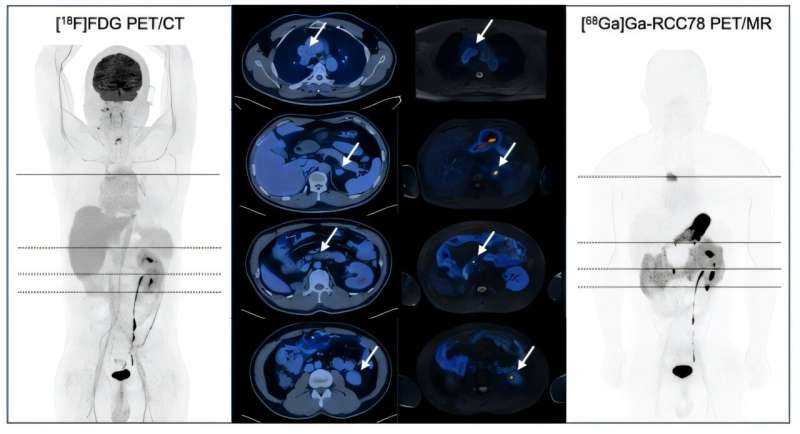
A groundbreaking next-generation positron emission tomography (PET) tracer, 68Ga-RCC78, has shown remarkable promise in early clinical research for the detection of clear cell renal cell carcinoma (ccRCC). This new tracer targets carbonic anhydrase IX (CAIX), a protein highly expressed in ccRCC tumors. The study demonstrated that 68Ga-RCC78 not only identified additional metastatic lesions that were missed by standard imaging techniques but also significantly reduced abdominal background noise, enhancing the overall accuracy of tumor detection.
The high sensitivity and precision of this new tracer are particularly significant for kidney cancer staging. By providing clearer images with better contrast between tumors and surrounding tissues, 68Ga-RCC78 can help clinicians make more informed decisions about treatment plans and patient management. This advancement could potentially lead to earlier diagnosis and improved outcomes for patients suffering from ccRCC.
The ability of the new tracer to identify additional metastatic lesions is a crucial breakthrough in the field of kidney cancer diagnostics. Standard imaging methods often miss these small, but critical, areas of disease spread, which can have serious implications for patient prognosis and treatment efficacy. With 68Ga-RCC78, doctors now have a tool that can reveal these hidden metastases, allowing for more comprehensive staging and personalized care.
Furthermore, the reduced abdominal background noise is another key advantage of this new tracer. This improvement not only enhances image clarity but also minimizes false positives, which are common in standard imaging techniques. By reducing background noise, 68Ga-RCC78 ensures that any detected signals are more likely to be true positive findings, thereby improving the reliability and accuracy of diagnostic results.
In summary, the development of 68Ga-RCC78 represents a significant step forward in the detection and management of kidney cancer. Its exceptional sensitivity and high tumor-to-background contrast make it an invaluable tool for clinicians working with ccRCC patients. As research continues, this new tracer has the potential to revolutionize how we approach kidney cancer diagnostics and treatment.