
A national study reveals a surge in kratom use among young adults, linked to addiction and mental health issues. Read more.
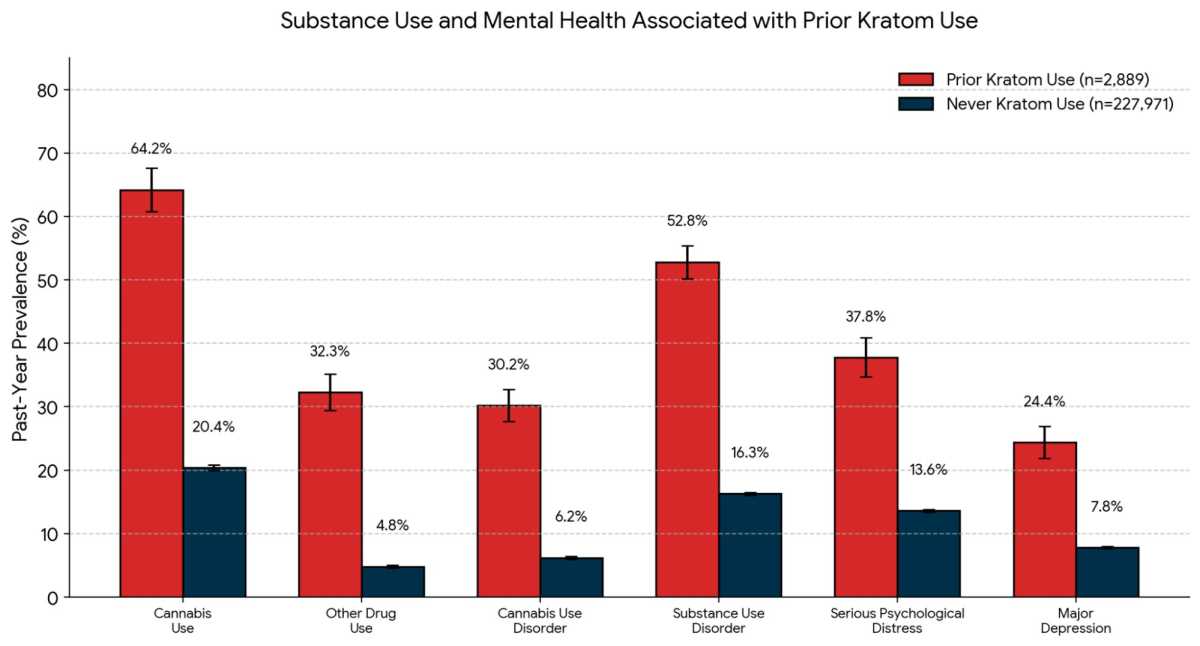
A national study has found that kratom use is on the rise among young adults in the United States, with significant implications for their mental health and substance abuse. According to researchers from the University of Michigan and Texas State University, this trend is particularly concerning given the lack of federal regulation or approval for kratom's medical uses.
The study, published in the Journal of Addiction Medicine, highlights that more than 5 million people in the U.S. have used kratom at least once in their lifetime, with over 100,000 children aged 12 to 17 reporting past use. Kratom is a plant from southeast Asia that can be found in various forms such as powders, liquid shots, pills, and teas.
Proponents of kratom argue it serves as a natural alternative for managing ailments like pain or anxiety, while opponents warn about its potential for addiction and the ease with which children can access it. The researchers emphasize that despite these concerns, the study does not definitively link kratom to mental health issues but notes an association between its use and substance abuse disorders.
Sean Esteban McCabe, a principal investigator involved in the research, stated, "Given the changing policy landscape involving kratom in the U.S., it was important to conduct this national study with recent data. The findings underscore the need for stricter regulations on kratom access, especially for minors."
The survey revealed that adults aged 21 to 34 reported the highest use of kratom at about 3.4%, while those who used it in the past year accounted for around 1%. McCabe these figures represent a significant increase from previous years.
"Policy changes regarding kratom and synthetic derivatives like 7-OH are needed in all states if we are serious about protecting our children," McCabe added. He pointed out that five million people is more than the combined populations of six smallest U.S. states, highlighting the potential public health implications.
The researchers also highlighted that kratom use may not be fully captured by standard drug tests due to its unique nature and the need for specialized testing methods. Additionally, regulatory frameworks vary widely across different states in the U.S., complicating efforts to address the issue effectively.
Dr. McCabe concluded, "While our study does not prove a direct cause-and-effect relationship between kratom use and mental health issues, it underscores the importance of continued research and policy action."


