
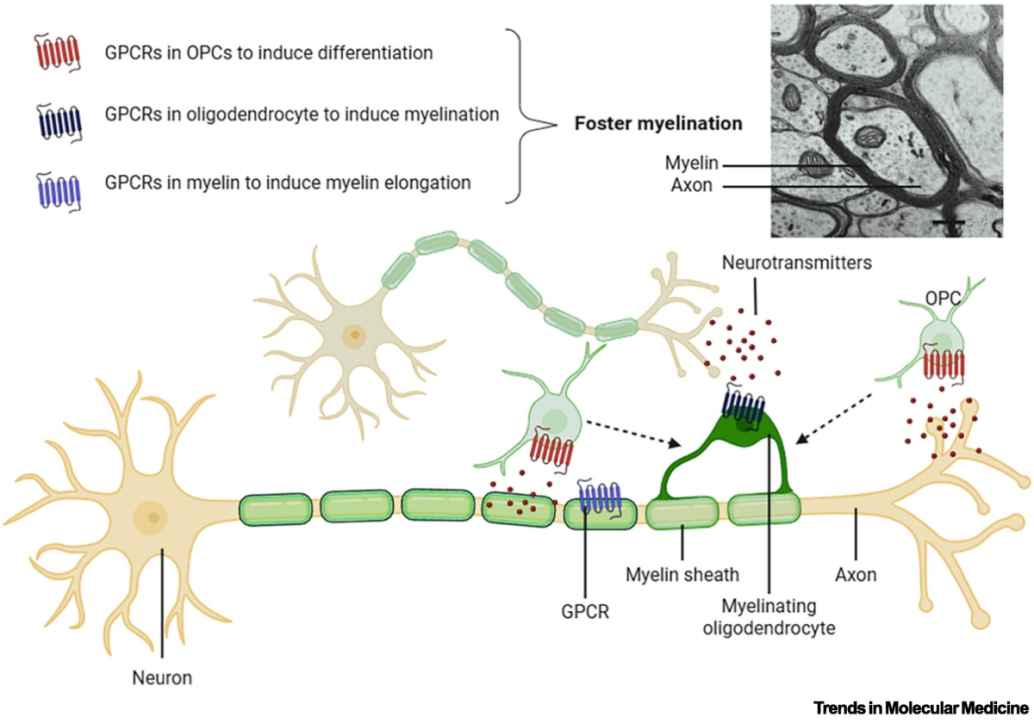
Research reveals myelin as an active regulator of brain plasticity, not just a structural insulator, opening new therapeutic opportunities for neurological disorders.
Myelin, the structure surrounding nerve fibers, has long been regarded as a passive component of the brain, primarily responsible for facilitating signal transmission. However, recent studies have shifted this paradigm, revealing myelin as an active regulator of brain plasticity. This newfound understanding of myelin's role in brain function has significant implications for the development of new therapies for neurological disorders.
According to a study published in Trends in Molecular Medicine, myelin plays a crucial role in the brain's ability to adapt and reorganize itself in response to new situations and stimuli. The study, led by Professor Carlos Matute of the University of the Basque Country, demonstrates that myelin is a dynamic structure that responds to brain activity, enabling the brain to reorganize itself and form new neuronal connections. This process is mediated by G protein-coupled receptors (GPCRs), which are activated by neurotransmitters and act as key regulators of myelin remodeling in the adult brain.
The study's findings have significant implications for our understanding of brain plasticity and the development of new therapies for neurological disorders. Myelin degeneration and damage are involved in a wide range of neurological disorders, from demyelinating diseases to neurodegenerative and neuropsychiatric disorders. The discovery that GPCR-mediated signaling plays a key role in myelin plasticity suggests that this pathway could be a strategic target for modulating myelin and developing new therapies for these disorders.
The study also highlights the importance of oligodendrocytes, the cells that produce myelin in the brain, in interpreting chemical signals released by neurons. Oligodendrocytes are no longer seen as simply providing electrical insulation, but rather as active components that play a critical role in brain function and plasticity. This new framework for understanding myelin's role in brain biology has the potential to lead to significant advances in the treatment of neurological disorders.
The research also underscores the complex relationship between myelin and neuronal activity. The study shows that myelin is not just a passive structure, but rather a dynamic component that responds to brain activity and enables the brain to adapt and reorganize itself. This understanding of myelin's role in brain plasticity has significant implications for the development of new therapies and treatments for a range of neurological disorders.
In conclusion, the study's findings represent a significant shift in our understanding of myelin's role in brain biology. Myelin is no longer seen as simply a structural insulator, but rather as an active regulator of brain plasticity. This new understanding has the potential to lead to significant advances in the treatment of neurological disorders and highlights the importance of continued research into the complex relationships between myelin, neuronal activity, and brain function.


