
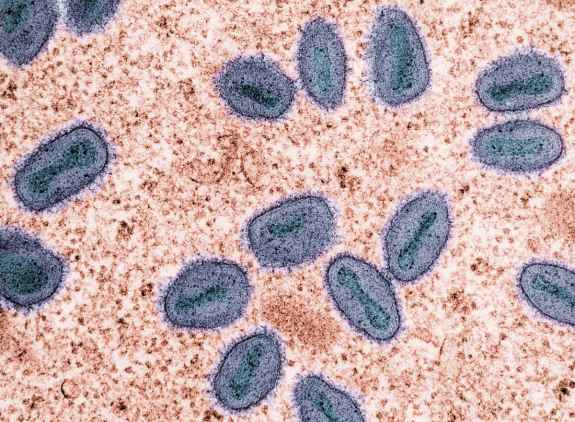
A recent study published in Nature Communications by Kaiser Permanente has revealed that hidden mpox infections may play a significant role in the ongoing spread of the virus, particularly among men who have sex with men (MSM). This finding challenges previous assumptions about how mpox is transmitted and highlights the importance of asymptomatic individuals in disease dynamics. According to the study's senior author, Sara Y. Tartof, Ph.D., MPH, "We have not known how mpox is transmitted, and why the cases seem to have very few connections to other cases." The research team conducted a comprehensive analysis of nearly 8,000 men who had sex with men in Southern California during mid- to late 2024. They tested for the mpox virus using rectal swabs taken as part of routine testing for sexually transmitted diseases.
The study found that individuals without symptoms accounted for most infections and likely played a prominent role in transmission, contrary to prior assumptions that people had to be symptomatic to spread the disease. Classic symptoms of mpox include fever, chills, muscle pain, swollen lymph nodes, and a painful rash. Despite these symptoms, many cases lacked known connections to other infected individuals. To further investigate this phenomenon, researchers used genomic data to reconstruct patterns of transmission. They discovered that only about one in every 33 infections gets diagnosed and confirmed through traditional testing methods.
This suggests that there may be an extensive network of undiagnosed mpox cases circulating among MSM communities. The study also sheds light on the impact of vaccination efforts during the 2022 outbreak. It found that the mpox vaccine reduced the risk of being diagnosed with mpox by 78% and reduced the risk of infection by 50%. However, vaccination rates have since decreased, leaving certain populations at higher risk. Tartof emphasized, "Unvaccinated people face a greater risk of severe disease if they are exposed to mpox, and our findings suggest this risk is greater than we previously understood." The study's authors argue that renewed focus on mpox vaccination could play a crucial role in controlling the outbreak.
The implications of these findings extend beyond just mpox. Understanding how hidden infections contribute to disease spread has broader applications for other infectious diseases as well. Tartof noted, "These genomic analyses also allow us to examine whether undiagnosed infections played a role in transmission." Moving forward, public health officials and researchers will need to consider these new insights when developing strategies to control mpox outbreaks and prevent future disease spread among at-risk populations.


