New research highlights the vulnerability of AI-driven digital pathology models to adversarial attacks, raising concerns about clinical safety and reliability in cancer diagnosis.
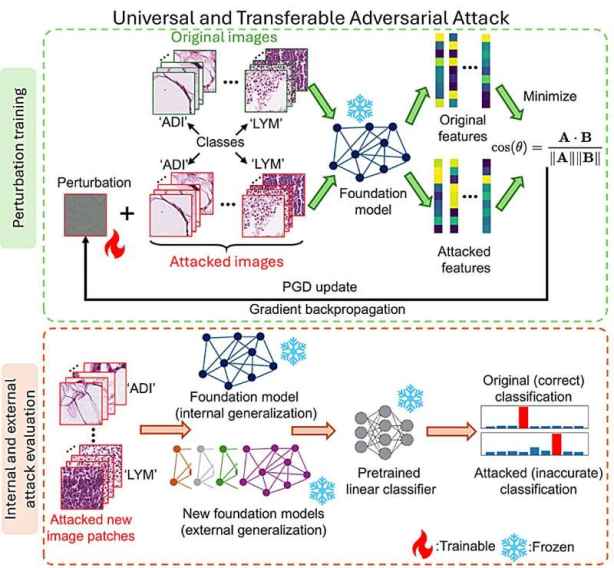
The integration of artificial intelligence (AI) into digital pathology through general-purpose foundation models holds immense promise for enhancing various tasks such as cancer detection and subtyping. However, recent findings reveal that these powerful AI systems are highly susceptible to adversarial attacks, which can manipulate microscopic images to deceive diagnostic models. This vulnerability exposes a significant clinical safety gap that could impact patient outcomes.
Adversarial attacks involve introducing subtle, often imperceptible changes to input data that can cause machine learning models to make incorrect predictions. In the context of digital pathology, researchers have demonstrated that adding specific types of noise to microscopic images can fool multiple cancer pathology models into misdiagnosing benign tissues as malignant ones. This raises serious concerns about the reliability and safety of AI-driven diagnostic tools in clinical settings.
The implications of this vulnerability are profound. If undetected, adversarial attacks could lead to misdiagnosis, delayed treatment, or unnecessary interventions, all of which can have severe consequences for patients. Clinicians rely heavily on accurate pathology reports to guide their decisions, making the robustness and reliability of AI systems critical. The findings underscore the need for developers to prioritize security measures in AI models used in medical diagnostics.
To mitigate these risks, researchers recommend implementing robust testing protocols that include adversarial attacks as part of model validation processes. Additionally, developing more resilient AI models through techniques such as adversarial training could help protect against such vulnerabilities. As digital pathology continues to evolve, ensuring the safety and accuracy of AI-driven diagnostic tools remains a top priority for both developers and healthcare providers.
This research highlights the ongoing challenges in balancing innovation with clinical safety in the rapidly advancing field of AI-assisted diagnostics.