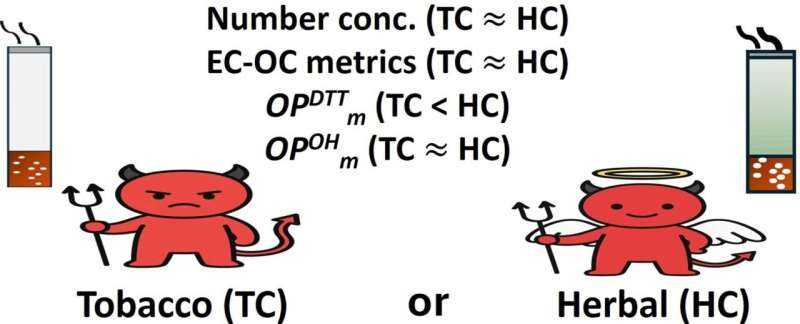
A new study reveals that herbal cigarettes, marketed as safer alternatives to conventional tobacco, are actually more harmful. Learn why they pose significant health risks.
Herbal cigarettes, widely sold in India and abroad as natural, tobacco-free, and even therapeutic alternatives to conventional cigarettes, have been found to be far from safe by a recent study conducted by researchers at the Indian Institute of Technology Gandhinagar (IITGN) in collaboration with the University of Illinois Urbana-Champaign (UIUC). The findings challenge the popular belief that these products are healthier options.
The study examined the emissions produced by herbal cigarettes and compared them to those from regular tobacco cigarettes. Surprisingly, it revealed that the smoke generated by herbal cigarettes can be just as harmful, if not more so, than conventional cigarette smoke. This is particularly alarming given that many consumers purchase these products with the assumption they are a safer alternative.
According to Dr. Anuj Srivastava, lead researcher from IITGN, "Our study shows that the combustion of herbal cigarettes produces a variety of toxic compounds and particulate matter, which can be just as dangerous as those found in tobacco smoke." The researchers identified several harmful substances including heavy metals, volatile organic compounds (VOCs), and polycyclic aromatic hydrocarbons (PAHs). These substances are known to cause respiratory issues, cardiovascular diseases, and even cancer.
The implications of this study extend beyond individual health concerns. Public health experts warn that promoting these products as safer alternatives could lead to a significant increase in smoking rates among young people who might perceive them as less harmful. This could potentially offset the gains made in reducing tobacco consumption over recent years.
In response to these findings, public health advocates are calling for stricter regulations on herbal cigarettes and increased awareness campaigns to educate consumers about their potential risks. "It is crucial that we inform the public about the dangers of herbal cigarettes," said Dr. Priya Desai from UIUC. "These products should not be marketed as a safer alternative without clear evidence supporting such claims."
The study underscores the need for rigorous scientific evaluation before any health-related claims are made about new tobacco products. As the market for these alternatives continues to grow, it is essential that regulatory bodies take proactive measures to protect public health.
In conclusion, while herbal cigarettes may seem like a healthier choice, they pose significant health risks and should not be considered a safer alternative to conventional tobacco products. Further research and stringent regulations are necessary to ensure consumer safety and promote overall public health.