Researchers uncover how lung cancer cells change identity to resist treatment, becoming more aggressive by reactivating early lung development processes, impacting adenocarcinoma therapy resistance.
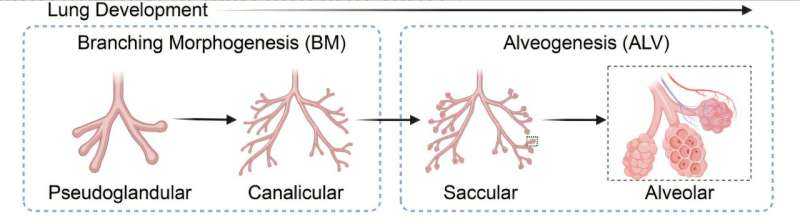
Lung cancer cells have been found to possess the ability to alter their identity in a manner that enables them to resist treatment, a discovery that has significant implications for oncology. This phenomenon, detailed in a recent research publication, sheds light on the mechanisms by which lung cancer cells can become increasingly aggressive and challenging to treat. The process involves the reactivation of certain developmental pathways that are typically active during the early stages of lung development.
The research, which focuses on lung adenocarcinoma, a common form of lung cancer, highlights the concept of cellular plasticity. This refers to the ability of cancer cells to change their characteristics in response to various factors, including therapeutic interventions. By understanding how lung cancer cells exploit developmental programmes to drive disease progression and therapy resistance, scientists aim to develop more effective treatment strategies.
The study's findings are outlined in a paper titled "Developmental programmes drive cellular plasticity, disease progression and therapy resistance in lung adenocarcinoma." This work contributes to a deeper understanding of the complex biology underlying lung cancer and suggests potential avenues for improving patient outcomes. The ability of lung cancer cells to revert to a more primitive, branching state is particularly noteworthy, as it appears to play a critical role in fueling resistance to therapy and promoting aggressive tumor growth.
Further research is needed to fully elucidate the mechanisms by which lung cancer cells change their identity and to explore the therapeutic potential of targeting these processes. However, the current study represents an important step forward in the quest to combat lung cancer, a disease that remains a leading cause of cancer-related deaths worldwide. By uncovering the molecular underpinnings of lung cancer progression and resistance, scientists can begin to develop more targeted and effective treatments, ultimately improving the prognosis for patients with this devastating disease.
The long-term implications of this research are profound, as they suggest that lung cancer may be more dynamic and responsive to therapeutic intervention than previously thought. If scientists can develop strategies to prevent or reverse the changes in cellular identity that drive resistance and aggressive growth, they may be able to significantly enhance treatment outcomes for patients with lung adenocarcinoma. This, in turn, could lead to a reduction in mortality rates and an improvement in the quality of life for those affected by this disease.