
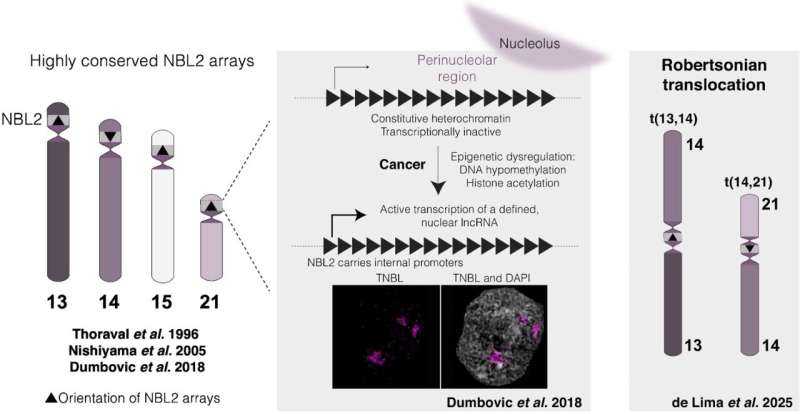
The notion of "junk DNA" has been a topic of interest in the scientific community for quite some time. Many repetitive regions of the genome were deemed irrelevant due to the limitations of available technologies, which did not allow for a thorough examination of these areas. However, recent studies have shed new light on the significance of these regions, particularly the SST1/NBL2 macrosatellites.
These macrosatellites, once considered virtually invisible, may play a more complex and decisive role in nuclear organization, genome regulation, and chromosomal instability. The discovery of their potential functions has significant implications for our understanding of cancer-linked genome instability. By exploring these previously overlooked regions, researchers may uncover new insights into the underlying mechanisms of cancer development.
The SST1/NBL2 macrosatellites are a type of repetitive DNA sequence that has been largely ignored in the past. However, with advancements in technology, scientists are now able to study these regions at a higher resolution, revealing their potential importance in maintaining genome stability. The complex biological functions of these macrosatellites may be linked to their ability to regulate chromosomal structure and organization, which can have a profound impact on cellular behavior.
Further research into the SST1/NBL2 macrosatellites and other repetitive genome regions may lead to a greater understanding of the underlying causes of cancer. By elucidating the role of these "junk DNA" regions in genome instability, scientists may be able to develop new therapeutic strategies for the prevention and treatment of cancer. The study of these previously overlooked regions highlights the importance of continued exploration and discovery in the field of genetics, as even the most seemingly irrelevant areas of the genome may hold the key to unlocking new insights into human disease.
The potential connection between "junk DNA" and cancer is an area of ongoing research, with scientists working to uncover the complex relationships between these repetitive genome regions and disease development. As our understanding of the genome and its functions continues to evolve, it is likely that new discoveries will be made, challenging our current perceptions of the role of "junk DNA" in human health and disease.


