
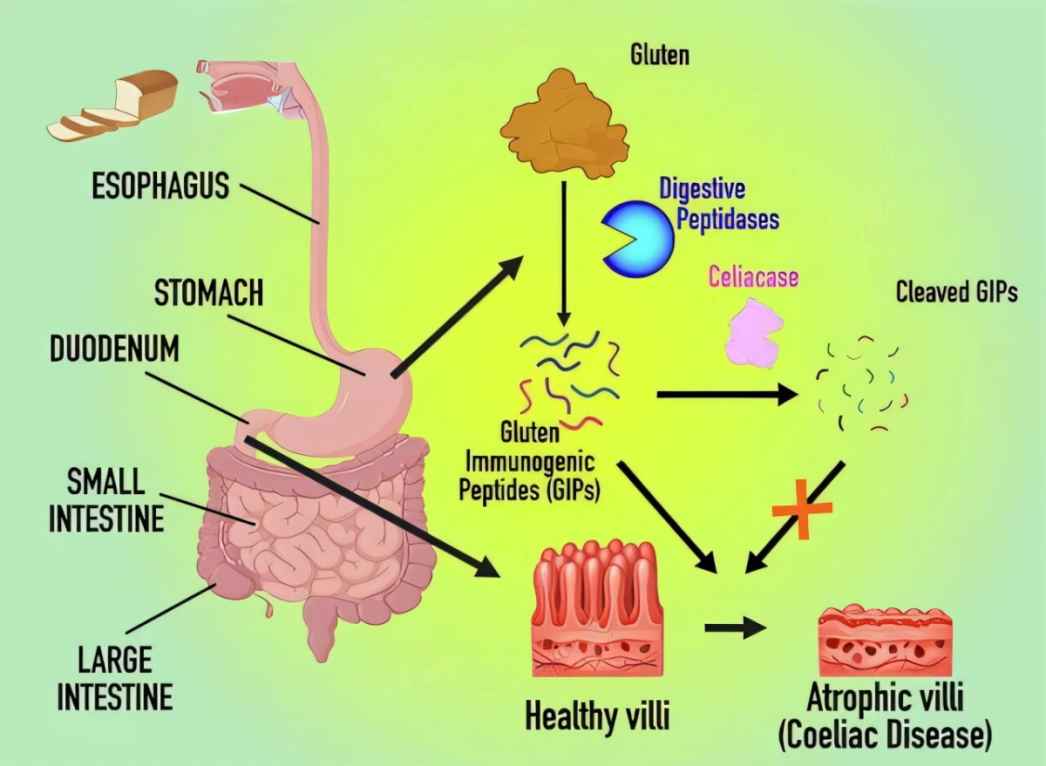
Researchers have designed a molecule that degrades gluten, offering new hope for managing celiac disease. The autoimmune disease is triggered by consuming gluten and other prolamins found in cereals.
A research project led by the University of Barcelona's Institute for Research in Nutrition and Food Safety and the Faculty of Pharmacy and Food Sciences has made the breakthrough. The Molecular Biology Institute of Barcelona also participated in the project.
The team successfully tested the gluten-degrading molecule, which could be a promising ally in managing celiac disease. The disease's symptoms are triggered by gluten consumption, and current treatment options are limited.
The research project's findings have been peer-reviewed and published, ensuring the content's credibility. The study's results are a significant step forward in developing new treatments for celiac disease.
The designed molecule has the potential to improve the lives of celiac disease sufferers. Further research is needed to fully realize the molecule's potential and develop it into a viable treatment option.


