Researchers at Trinity College Dublin have discovered key differences in immune cell metabolism between people with latent and active tuberculosis, shedding light on the mechanisms behind varying infection outcomes.
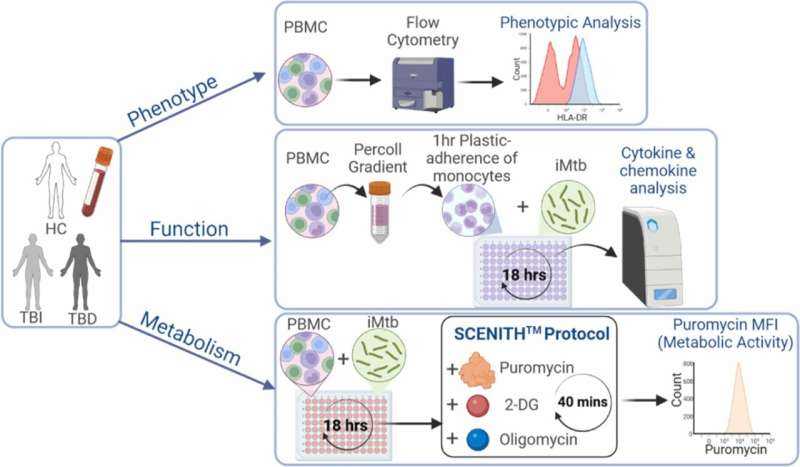
Scientists from Trinity College Dublin have made a significant breakthrough by identifying distinct metabolic signatures within immune cells of individuals with latent versus active tuberculosis (TB). This research, published recently, delves into how immune cells generate and use energy during TB infections. The findings could provide crucial insights into why some people can control the infection while others develop full-blown disease.
The study involved analyzing immune cell metabolism in both groups to understand the underlying biological processes that differentiate those who remain asymptomatic carriers from those who progress to active TB. According to the researchers, the key lies in how these cells manage their energy production and utilization. In individuals with latent TB, immune cells appear to have a more efficient metabolic process, enabling them to better control the bacteria. Conversely, in those with active TB, there are notable disruptions in this metabolic balance.
This discovery not only enhances our understanding of TB pathogenesis but also opens up new avenues for developing targeted therapies and preventive measures. By identifying specific metabolic markers, researchers can now explore ways to enhance immune cell function and improve overall resistance against the disease. The findings could lead to innovative treatments that bolster the body's natural defenses, potentially reducing the burden of TB globally.
The implications of this research extend beyond just tuberculosis, as it highlights the importance of cellular metabolism in immune responses to various infections. Understanding these metabolic signatures may pave the way for broader applications in immunology and infectious disease research, contributing significantly to global health initiatives aimed at controlling and eradicating TB.