Researchers at Mount Sinai’s Icahn School of Medicine have discovered that deep brain stimulation can remodel white matter pathways and alter neural networks linked to depression, offering new insights into how the therapy works.
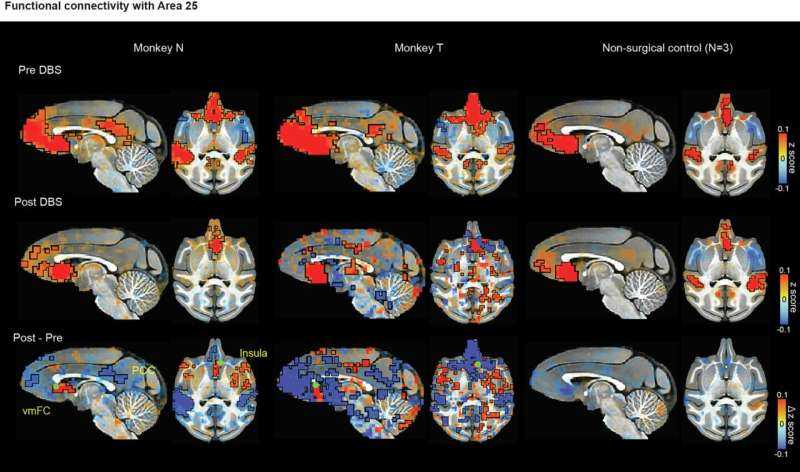
Researchers from the Icahn School of Medicine at Mount Sinai have made a groundbreaking discovery, revealing for the first time that deep brain stimulation (DBS) can directly impact the brain’s white matter pathways and large-scale neural networks. This finding, published in Nature Neuroscience on June 1, provides critical insight into how DBS helps patients recover from severe depression.
The study highlights the potential of DBS as an emerging therapy for treatment-resistant depression and other neuropsychiatric disorders. By remodelling white matter pathways, DBS may be able to enhance myelination—a process that improves communication between neurons—and shift brain networks involved in mood regulation. These changes could explain why patients often experience significant improvements after undergoing DBS.
Prior to this research, the exact mechanisms by which DBS alleviates depression were not well understood. The new findings suggest that DBS may work by promoting the growth and insulation of nerve fibers, thereby improving signal transmission across the brain. This enhanced connectivity could help restore balance to disrupted neural circuits associated with depression.
The study involved a detailed analysis of brain scans from patients who had undergone DBS treatment for depression. Researchers observed increased myelination in specific regions of the brain, which correlated with improved clinical outcomes. These results indicate that DBS may offer a promising new avenue for treating depression and other mental health conditions by directly addressing underlying biological factors.
This research not only advances our understanding of DBS but also opens up new avenues for developing more targeted and effective treatments for depression. As further studies are conducted, the potential benefits of DBS could extend beyond just depression to other neuropsychiatric disorders as well.
In conclusion, this study provides a significant breakthrough in the field of neurology by uncovering how deep brain stimulation can remodel white matter pathways and alter neural networks linked to depression. These findings pave the way for more precise and effective treatments that could potentially transform the lives of millions suffering from treatment-resistant depression.