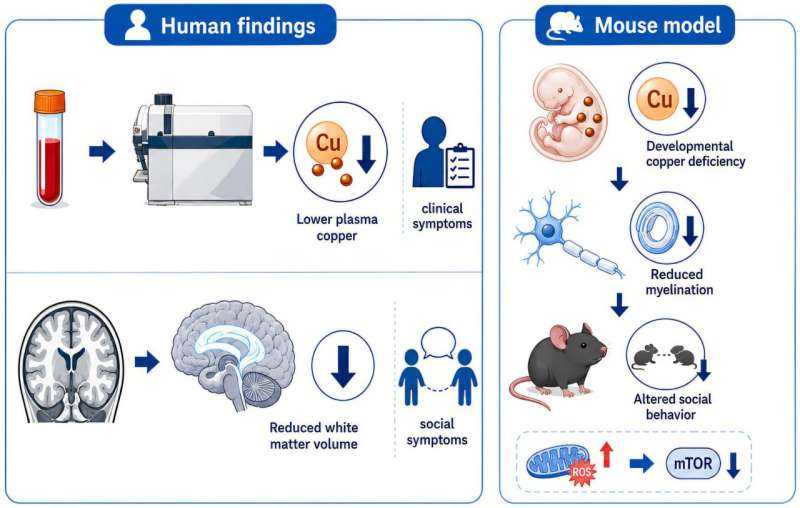
Trace elements, despite being required in minimal amounts, play a significant role in the development of the brain. Recent research led by a team from Niigata University has uncovered a potential connection between copper, an essential trace element, and the social symptoms associated with autism spectrum disorder (ASD). This study suggests that copper may serve as a crucial link between metabolic changes in the body and the development of white matter in the brain, ultimately influencing social behavior in individuals with ASD.
The findings of this research have important implications for our understanding of the complex factors that contribute to the development of autism. By examining the relationship between copper levels and white matter development, the researchers hope to gain a deeper insight into the underlying mechanisms that drive social symptoms in ASD. This knowledge could potentially lead to the development of new therapeutic approaches that target copper imbalance and related metabolic changes.
Copper is a vital nutrient that plays a role in various bodily functions, including the development and maintenance of healthy connective tissues. However, an imbalance of copper can have significant effects on the brain and behavior. The research team's discovery of a potential link between copper imbalance and autism symptoms highlights the importance of considering the role of trace elements in the development and treatment of neurodevelopmental disorders.
Further research is needed to fully understand the relationship between copper, white matter development, and social behavior in ASD. Nevertheless, the findings of this study provide a promising lead for investigators seeking to uncover the underlying causes of autism and develop effective treatments. By exploring the complex interplay between metabolic changes, trace elements, and brain development, researchers may ultimately uncover new avenues for improving the lives of individuals with ASD and their families.
The potential connection between copper imbalance and autism symptoms also underscores the importance of considering the role of nutrition and environmental factors in the development of neurodevelopmental disorders. As researchers continue to explore the complex relationships between trace elements, metabolism, and brain development, they may uncover new insights into the causes of autism and other related conditions, ultimately leading to the development of more effective prevention and treatment strategies.