
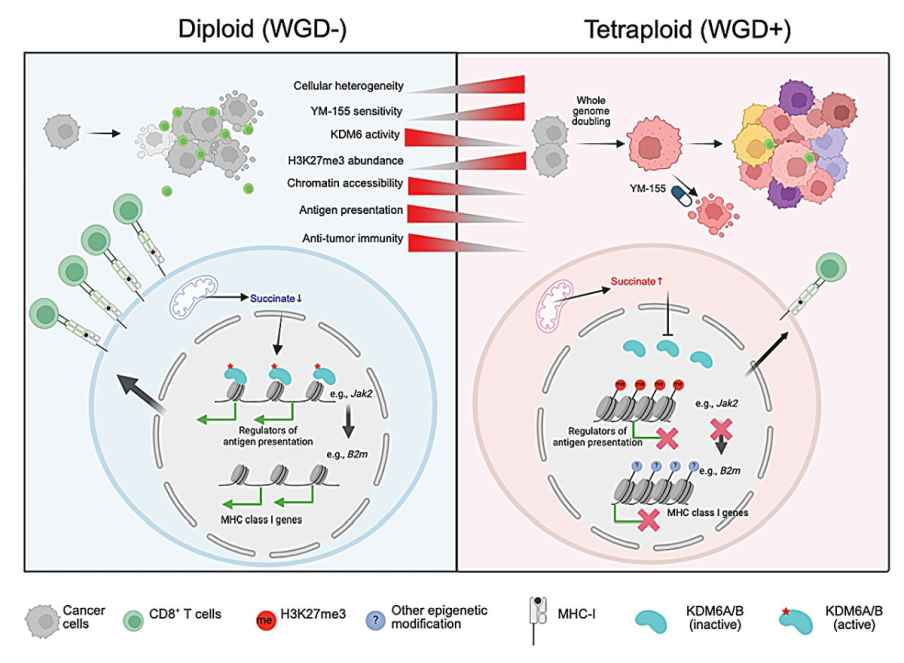
Researchers discover that breast cancer cells with doubled genomes can dodge immunotherapy by turning off key immune signals, revealing a potential new target for therapy.
Breast cancer cells with doubled genomes have been found to evade immunotherapy by suppressing key immune signals, according to a recent study. This discovery sheds light on the mechanisms by which these cells develop resistance to treatment and highlights a potential new target for therapy. The research, led by the University of Liège and the Dana-Farber Cancer Institute, reveals that whole-genome doubling, a phenomenon observed in approximately 37% of primary solid tumors, can lead to immune suppression in breast cancer.
The study shows that whole-genome doubling promotes immune suppression by reducing the expression of antigen-presentation molecules, making it difficult for the immune system to recognize and attack cancer cells. Normally, cancer cells display fragments of abnormal proteins, known as antigens, on their surface, which are recognized by immune cells, such as cytotoxic CD8+ T lymphocytes. However, in the case of whole-genome doubling, the cancer cells develop a strategy of invisibility by switching off the genes responsible for antigen presentation, making them less visible to the immune system.
The researchers found that this camouflage is not genetic but epigenetic, meaning that it is reversible and not due to a mutation in the DNA sequence. The epigenetic mechanism is driven by metabolic changes that lead to transcriptional repression of immune genes, making it possible to restore antigen presentation and make whole-genome-doubled tumor cells recognizable to the immune system once again. This discovery has potential implications for clinical practice, as whole-genome duplication could serve as a biomarker for stratifying patients and guiding treatment decisions, particularly towards combinations of epigenetic inhibitors and immunotherapy.
The study's findings are significant, as they reveal a new mechanism by which breast cancer cells can evade immunotherapy. The researchers suggest that targeting the epigenetic regulator PRC2 complex, which is involved in the silencing of antigen presentation, could be a potential therapeutic strategy. This approach could restore antigen presentation and make whole-genome-doubled tumor cells recognizable to the immune system once again, while selectively inhibiting the growth of whole-genome-doubled tumors.
The discovery of this mechanism has important implications for the development of new therapeutic strategies that combine epigenetics and immunotherapy. The researchers are currently working on developing methods for detecting whole-genome duplication that are more accessible than whole-genome sequencing, which remains costly and is rarely used in routine clinical practice. Clinical studies will be necessary to validate these approaches and determine their potential for improving treatment outcomes for breast cancer patients.
In conclusion, the study's findings highlight the complex mechanisms by which breast cancer cells can evade immunotherapy and underscore the need for continued research into the development of new therapeutic strategies that can effectively target these cells. The discovery of the epigenetic mechanism by which whole-genome-doubled breast cancer cells suppress immune signals is a significant step forward in this effort and has the potential to lead to the development of more effective treatments for breast cancer patients.


