
Researchers develop a new drug candidate that reprograms the immune system to target glioblastoma, a deadly form of brain cancer, with promising preclinical results.
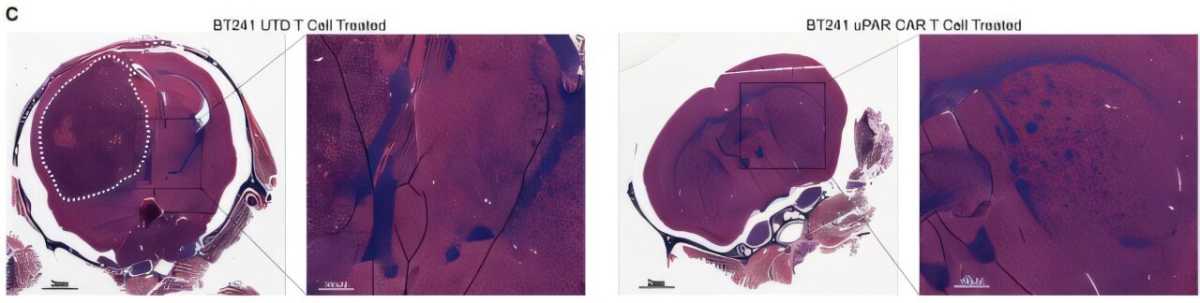
A new drug candidate being developed at McMaster University has shown early promise as a treatment for glioblastoma, the most aggressive and common type of primary brain cancer in adults. The newly developed drug candidate, called a uPAR Chimeric CAR T cell, is an early-stage immunotherapy that reprograms the body's own immune system to recognize and attack a specific protein found on the surface of glioblastoma cells.
The standard of glioblastoma care has remained largely unchanged for over two decades, and the disease remains uniformly fatal. According to Sheila Singh, a professor in McMaster's Department of Surgery and principal investigator on the new study, new therapies for glioblastoma are urgently needed. The median survival rate for glioblastoma is less than 15 months from diagnosis, highlighting the need for innovative treatments.
The novel cell therapy targets the urokinase receptor, a protein found on the surface of glioblastoma cells, as well as nearby support cells that fuel tumor growth. By eliminating deadly cancer cells and dismantling the biological infrastructure that allows glioblastoma to persist and recur after treatment, the new therapy offers a promising approach to tackling this devastating disease. Researchers say the findings could mark an important advance against the disease, and discussions about moving the lab's recent discovery toward clinical trials are already underway.
The development of this new drug candidate is part of a broader shift in cancer research, with scientists at other institutions also converging on the urokinase receptor as a promising drug target in lung and pancreatic cancers. This broader focus on the urokinase receptor is driving new collaborative efforts aimed at developing therapies that could potentially work across multiple hard-to-treat cancers. For William Maich, a postdoctoral fellow at McMaster and first author on the new study, the prospect of translating some of his own science into a tangible treatment that can improve quality of care is deeply motivating, especially in a field where meaningful clinical advances have been rare for decades.
The researchers have patented the new therapy and are now exploring potential commercial and clinical pathways for the drug. With the goal of continuing to push this research forward, the team aims to translate these preclinical results into first-in-human studies, offering new hope for patients with glioblastoma. As the search for effective treatments for this devastating disease continues, the development of this new drug candidate offers a promising avenue for exploration, and its potential impact on the lives of patients with glioblastoma could be significant.


