
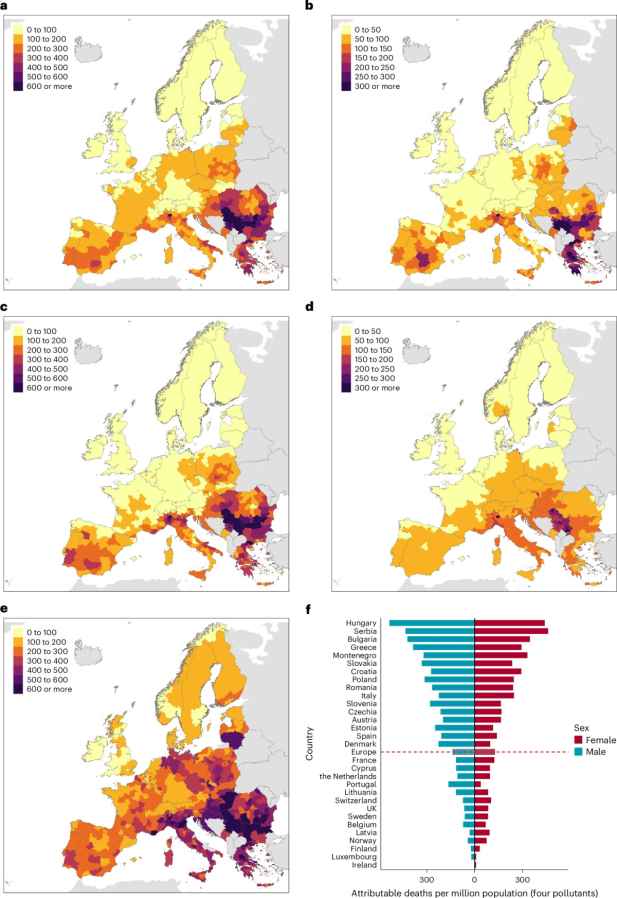
A new study reveals that short-term exposure to air pollutants is associated with 146,500 premature deaths per year in Europe, with fine particles being the most harmful pollutant.
A recent study has found that the combined short-term effects of air pollutants are linked to approximately 146,500 premature deaths per year in Europe. The research, conducted by the Barcelona Institute for Global Health, analyzed data from 31 European countries and found that fine particles, nitrogen dioxide, ozone, and coarser particles are all major contributors to this alarming number of deaths. The study's findings highlight the need for urgent action to reduce air pollution levels and protect public health.
The study's results show that fine particles, also known as PM2.5, are the most harmful pollutant, accounting for around 79,000 preventable deaths per year. Nitrogen dioxide, ozone, and coarser particles also have significant impacts, with estimated death tolls of 69,000, 31,000, and 29,000 per year, respectively. These figures cannot be added together, as the effects of the pollutants often overlap. The study's authors note that previous research has focused primarily on fine particles, leaving a knowledge gap regarding the impact of other pollutants on public health.
The research also reveals that air pollution does not affect everyone equally. Young men are more vulnerable to ambient air pollutants than young women, likely due to higher exposure levels or the earlier onset of comorbidities. However, this pattern reverses with age, with women over 85 years old being at higher risk. The study's findings also suggest that particulate matter is more strongly associated with cardiovascular risks in women, while ozone has a greater impact on men. These results highlight the need for tailored protection measures, rather than a one-size-fits-all approach.
The study's authors used a novel approach to estimate exposure to air pollution, combining daily data from monitoring stations, satellites, land use, and meteorological variables. This allowed for a more precise analysis of how short-term exposure to air pollutants affects different populations. The research provides valuable insights for policymakers and public health professionals, supporting the development of impact-based early warning systems that target vulnerable groups.
The study's findings are particularly relevant in the context of new daily air quality standards being introduced across Europe. The results provide practical insights to help protect the population more effectively, emphasizing the need for urgent action to reduce air pollution levels. By understanding the combined effects of multiple pollutants, policymakers can develop more effective strategies to mitigate the health impacts of air pollution and save lives.
The research has significant implications for public health policy, highlighting the need for a comprehensive approach to addressing air pollution. By reducing emissions and implementing effective protection measures, governments can help prevent premature deaths and improve the health and well-being of their citizens. The study's findings serve as a stark reminder of the urgent need for action to address the devastating health impacts of air pollution in Europe.


