
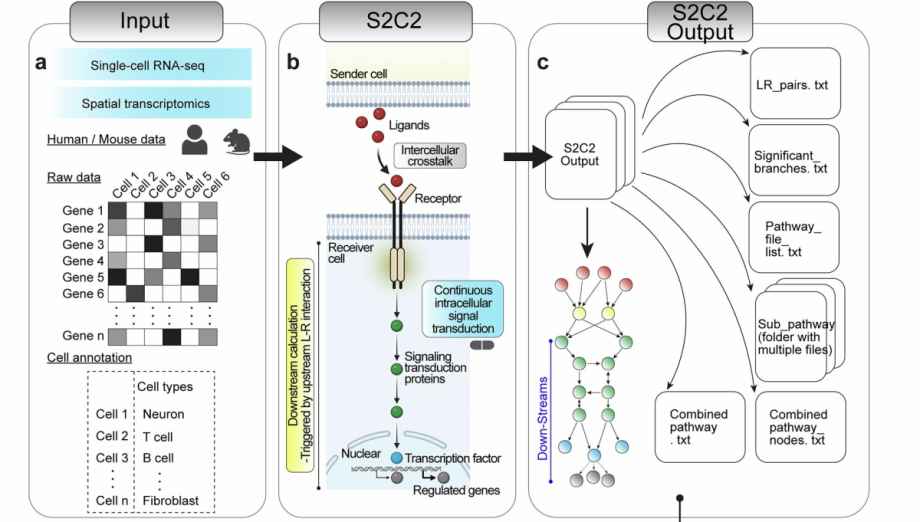
Scientists at Houston Methodist have unveiled a groundbreaking artificial intelligence (AI) platform that can decode how cells communicate within the human body. This technology, called iS2C2, offers insights into conditions such as Alzheimer’s disease, cancer, and other complex disorders by identifying and modeling cellular communication networks.
Understanding diseases often involves determining how these cellular conversations have gone awry and finding ways to repair them. For instance, in Alzheimer's disease, disrupted signaling may contribute to inflammation and brain damage. Similarly, abnormal cell-to-cell communication can lead to tumor growth, spread, and resistance to treatment in cancer patients.
The iS2C2 platform combines advanced mathematical modeling with large-language-model-enabled reasoning. It analyzes complex data, infers how cells might be communicating, determines what causes the disease to develop, and explains these findings in simple, biologically meaningful language. This capability could significantly expedite research efforts by moving from interpreting complex data to gaining a clearer understanding of disease mechanisms.
To address limitations posed by incomplete datasets when studying single cells and their organization, iS2C2 incorporates generative AI modules that fill in missing information, improve predictions, and enhance biological interpretation. This feature helps overcome significant barriers in real-world big picture studies.
When applied to Alzheimer's disease datasets, the platform generated accurate, reproducible, and expert-validated results. It uncovered previously underappreciated communication pathways in neurons and surrounding support cells in the brain that may contribute to disease progression and could point to new treatment targets.
In bone cancer metastasis data, iS2C2 revealed cell-to-cell communication patterns contributing to tumor growth in bones when cancer spreads. Additionally, it identified a therapy often used in breast cancer that could be combined with other treatments to block bone cancer spread earlier.
Dr. Stephen Wong, the lead author of this study and John S. Dunn Presidential Distinguished Chair in Biomedical Engineering at Houston Methodist, emphasized, "The fact that this AI platform can point us to new treatment strategies may represent a game-changer. Identifying which cells are driving diseases, how they communicate, and which pathways might be therapeutically interrupted creates a much more actionable map for precision medicine."
This development holds promise not only for Alzheimer's and cancer but also for other complex conditions where cellular communication is disrupted. As the platform continues to evolve, it may offer valuable insights into developing targeted therapies across various diseases.
The iS2C2 technology represents a significant step forward in our ability to understand and treat complex diseases by decoding how cells communicate within the human body.


