A new study suggests an AI-assisted model using 71 blood proteins can help predict retinal degeneration in diabetic patients before symptoms appear.
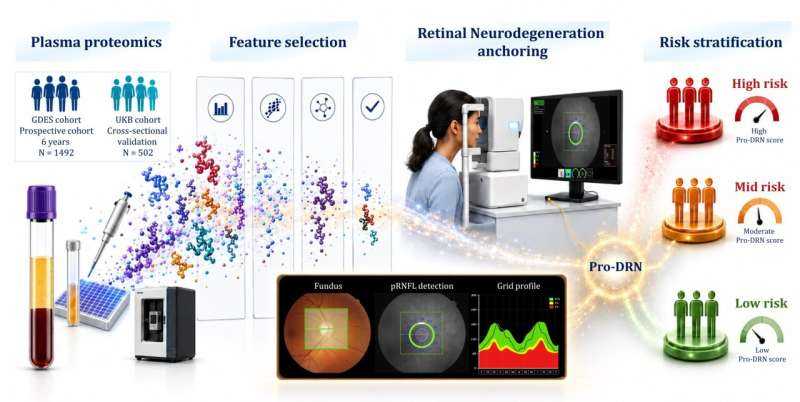
A groundbreaking study published in PLOS Medicine has revealed the potential of an artificial intelligence (AI)-assisted model that utilizes a combination of 71 different blood proteins to predict retinal degeneration in diabetic patients. The research, led by Huangdong Li from the Guangdong Provincial Clinical Research Center for Ocular Diseases in Guangzhou, China, offers hope for earlier detection and intervention.
The study involved analyzing blood samples from diabetic patients to identify specific protein markers associated with retinal degeneration. By developing an AI model that can process these complex biomarkers, researchers aim to provide clinicians with a tool to predict the onset of this condition before visual symptoms become apparent.
This early prediction capability could significantly improve patient outcomes by enabling timely interventions such as lifestyle changes or medical treatments aimed at slowing disease progression. The ability to identify those at high risk allows for proactive management strategies that can potentially prevent severe vision loss.
The findings from this study are particularly significant considering the increasing prevalence of diabetes and its associated complications, including diabetic retinopathy. Early detection is crucial in managing these conditions effectively, as it enables healthcare providers to tailor treatment plans more precisely to individual patient needs.
While further research is needed to validate these results on a larger scale, the potential impact of this AI model could revolutionize how we approach the prevention and management of diabetic retinal degeneration. As technology continues to advance, such predictive tools may become an integral part of routine diabetes care, offering a new layer of protection for patients at risk.