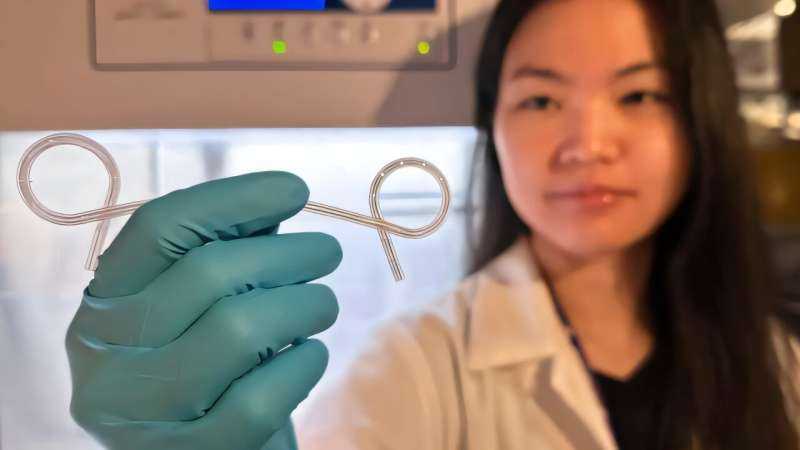
A 3D printed stent, uniquely shaped like a lily, has been developed to potentially speed up the recovery process for patients who have undergone weight-loss surgery. Sleeve gastrectomy is one of the most common weight-loss operations in the United States, with approximately 250,000 Americans undergoing the procedure every year. For the majority of patients, the recovery process is relatively smooth and uneventful. However, a small percentage of patients experience complications, including gastric leaks, which can lead to the formation of abscesses.
Gastric leaks are a serious concern for patients who have undergone weight-loss surgery, particularly those who have had revision surgeries. The incidence of gastric leaks can range from 1% to 3% in routine cases, but this number can be as high as 1 in 10 for revision surgeries. When a gastric leak occurs, fluid escapes from the stomach and forms an abscess, which can lead to severe consequences if left untreated. The development of a 3D printed stent, such as the one shaped like a lily, could provide a promising solution for reducing the risk of gastric leaks and improving patient outcomes.
The 3D printed stent is designed to be inserted into the stomach to support the healing process and prevent gastric leaks. Its unique shape, resembling a lily, allows it to conform to the natural contours of the stomach, providing a secure fit and minimizing the risk of complications. By using 3D printing technology, the stent can be customized to meet the specific needs of each patient, taking into account the individual's anatomy and the location of the gastric leak.
The potential benefits of the 3D printed stent are significant, particularly for patients who are at high risk of developing gastric leaks. By reducing the incidence of gastric leaks and abscesses, the stent could help to improve patient outcomes, reduce the need for additional surgeries, and shorten recovery times. As researchers continue to develop and refine the 3D printed stent, it is likely that this innovative technology will play an increasingly important role in the treatment and management of patients who have undergone weight-loss surgery.