Researchers from the Technical University of Munich (TUM) and TUM University Hospital explore how future 6G networks will enhance telemedicine, enabling up to 40% more applications to run simultaneously for seamless patient care.
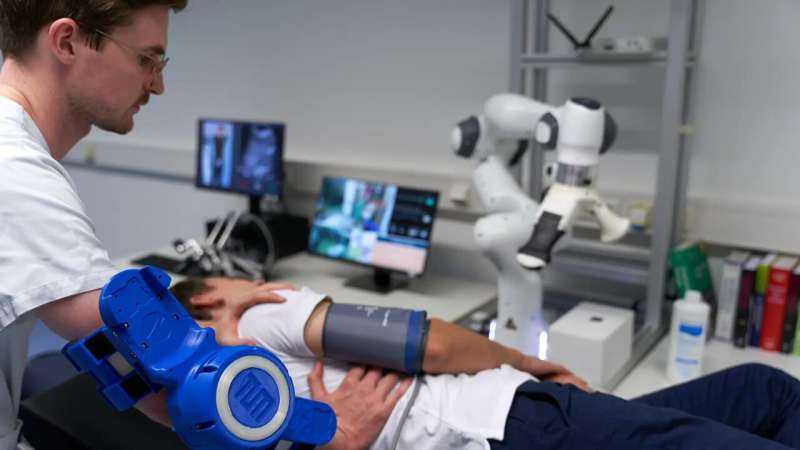
Telemedicine, continuous monitoring, and remote procedures are becoming indispensable in modern healthcare. These technologies require reliable data transmission without interruptions to ensure smooth clinical operations. To meet these demands, researchers at the Technical University of Munich (TUM) and TUM University Hospital have delved into how future 6G networks can optimize computing power and data transmission.
The study reveals that 6G networks could significantly improve network utilization in telemedicine by allowing up to 40% more applications to run simultaneously. This advancement is crucial for enhancing the efficiency of healthcare services, particularly during emergencies or when multiple patients need concurrent care. By leveraging advanced networking capabilities, 6G can support a wider range of medical procedures and real-time data exchange, ultimately improving patient outcomes.
The researchers focused on developing strategies to manage computing power and data transmission more effectively within the 6G framework. Their findings suggest that these networks will not only handle increased application loads but also ensure faster response times and reduced latency. This is particularly important for applications such as remote surgeries, where real-time communication and precise control are paramount.
In conclusion, the potential of 6G networks to revolutionize telemedicine by enabling more efficient data transmission and application management cannot be overstated. As healthcare continues to evolve, these technological advancements will play a pivotal role in delivering better patient care and expanding access to medical services globally.