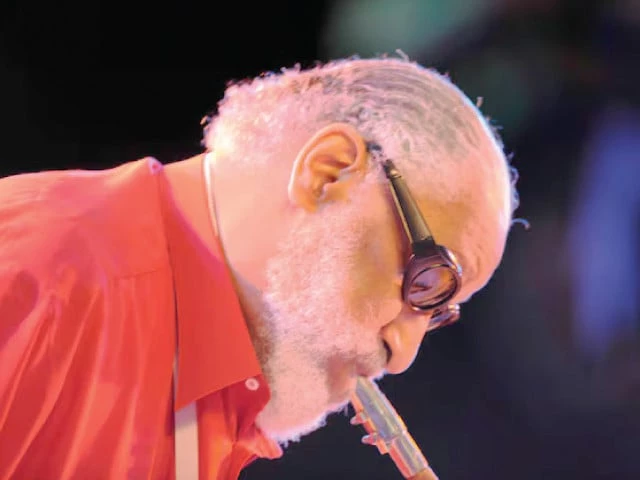
Sonny Rollins, a renowned jazz saxophonist, has passed away at 95, leaving behind a legacy of innovative music that reshaped the language of jazz improvisation, with a career spanning over six decades.
Sonny Rollins, widely regarded as one of the defining voices of modern jazz, has died at the age of 95, according to a statement issued by his family and publicist. The legendary tenor saxophonist, known as the 'Saxophone Colossus', had battled respiratory illness in later years and retired from performing in 2014. He passed away at his home in New York, bringing an end to a career that stretched across more than six decades and left an indelible mark on the world of jazz.
Rollins' unique sound, which combined a muscular tone with restless melodic invention, made him one of the few musicians considered the equal of fellow jazz revolutionary John Coltrane. Their celebrated duel on 'Tenor Madness' in 1956 remains one of the defining moments in jazz history. Born Theodore Walter Rollins in Harlem in 1930, he grew up immersed in New York's vibrant jazz culture, inspired by saxophone pioneer Coleman Hawkins and mentored by Thelonious Monk. Rollins emerged as a prodigious talent while still in his teens, recording with figures including Miles Davis, Bud Powell, and Art Blakey.
Rollins' compositions, including 'Oleo', 'Airegin', 'Doxy', and the calypso-inspired 'St Thomas', have become enduring jazz standards, reflecting the Caribbean roots of his family from the US Virgin Islands. His landmark 1956 album 'Saxophone Colossus' established him as one of the leading improvisers of his generation. Despite his growing fame, Rollins remained plagued by self-doubt, and in 1959, at the height of his acclaim, he abruptly withdrew from public performance and spent more than two years practicing alone on New York's Williamsburg Bridge. This period of isolation produced his acclaimed comeback album 'The Bridge', released in 1962.
Rollins' career was also marked by personal struggles, including a battle with heroin addiction and time spent in prison during the early 1950s. However, he successfully overcame these challenges and went on to record more than 60 albums as a bandleader, collaborating with artists ranging from Ornette Coleman to The Rolling Stones. In later life, he received numerous awards, including the Grammy Lifetime Achievement Award, the Kennedy Center Honors, and the National Medal of Arts from former US president Barack Obama. As he reflected on mortality in a 2011 interview, Rollins said, "I'm the last guy but in a way I'm not, because when I'm gone my music is going to be here." With his passing, the jazz world has lost a true legend, but his music will indeed continue to inspire and influence generations to come.