From meat to messengers, pigeons have had a complex history with humans for millennia. Now reviled as pests, their ancient roles are explored.
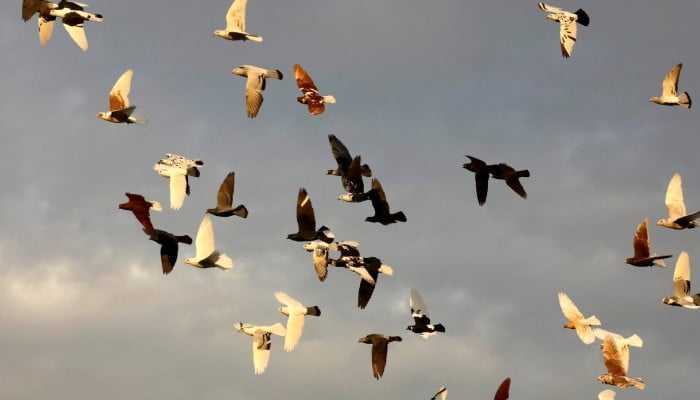
Pigeons fly in the sky in Sanliurfa, Turkey, December 10, 2016. — Reuters
PARIS: They have been our meat and our messengers, a source of fertiliser and a religious symbol: while pigeons are now mostly reviled as dirty city pests, they long played an important role in human history.
For thousands of years, these birds were highly valued for their ability to carry messages across great distances. In ancient times, pigeon post was used by the Romans, Greeks, Egyptians, Persians and Chinese empires to send urgent communications between distant cities. The practice was so widespread that a special term emerged: "pigeon post."
However, pigeons also had more sinister uses throughout history. They were often hunted for food or sport, and in some cultures, their feathers were used as currency. Despite these darker aspects of pigeon-human relations, the birds' contributions to human communication systems cannot be overlooked.
In ancient Mesopotamia, for example, a Sumerian tablet from around 3500 BC depicts a man with a pouch on his back releasing pigeons into the sky. This suggests that pigeon post was already in use by this time, and it likely played a significant role in the development of early postal services.
Today, however, pigeons are often seen as nothing more than dirty city pests. They defecate indiscriminately, contaminate food supplies, and can carry diseases such as salmonella. In many urban areas, pigeon populations have grown unchecked, leading to public health concerns and a need for regular culling programs.
Despite their current status, the relationship between humans and pigeons has been long and complex. From ancient messengers to modern-day nuisances, these birds have played an integral part in human history. As we continue to grapple with pigeon problems in our cities today, it's worth remembering that their story is also a reflection of our own.
Understanding this historical context can help us find more humane solutions for coexisting with pigeons and other urban wildlife. By recognizing the value these birds once held, we may be able to strike a better balance between preserving their role as part of our shared history and addressing the challenges they present in today's cities.