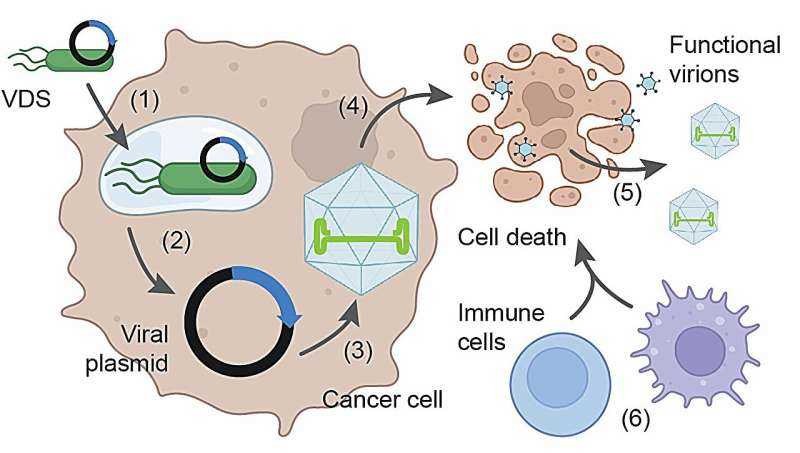
Researchers at the University of Massachusetts Amherst have developed non-toxic Salmonella to deliver safe yet potent viruses against liver and pancreatic cancer, showing promising results in animal models.
Scientists at the University of Massachusetts Amherst have made significant strides in cancer treatment by engineering non-toxic Salmonella bacteria. These engineered bacteria are designed to carry viruses that can target and destroy liver and pancreatic cancer cells without harming healthy tissue. This innovative approach could offer new hope for patients suffering from these aggressive cancers, which typically have a poor prognosis.
In their study, the researchers found that mice treated with this combination of engineered Salmonella and safe viruses experienced almost complete tumor elimination. Notably, these animals lived significantly longer compared to those in control groups. The results suggest that this method could be an effective therapeutic strategy for treating liver and pancreatic cancers, which are often resistant to conventional treatments.
The success of the study lies in the ability of the engineered Salmonella to selectively deliver viruses directly to cancer cells. These viruses, while harmless to humans, are highly effective at destroying tumor cells. By using a non-toxic carrier like Salmonella, the researchers have created a safe and targeted delivery system that could potentially be used in human clinical trials.
These findings represent a promising breakthrough in the field of cancer immunotherapy. If further research confirms these results, this approach could offer a new treatment option for patients with liver and pancreatic cancers, significantly improving their chances of survival.