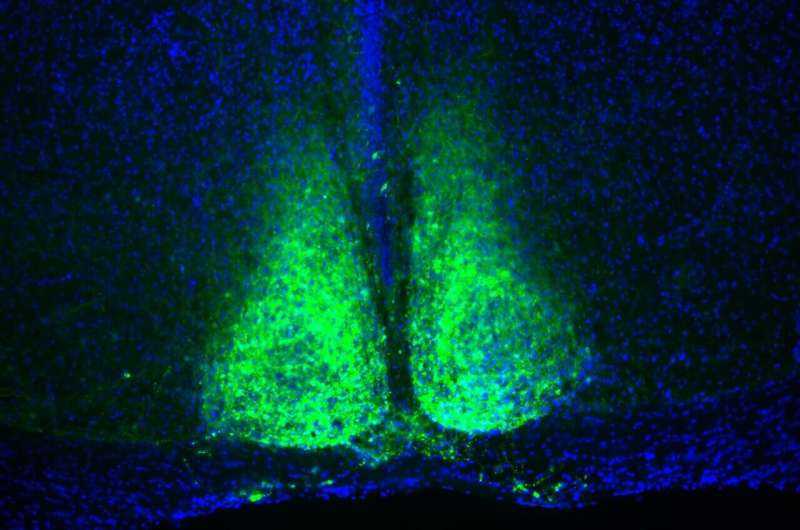
Researchers have discovered a brain circuit responsible for timing torpor—a state of low metabolism—in animals like hummingbirds and bats. This finding could have implications for managing astronaut health during long space missions.
Scientists have made a significant breakthrough in understanding the biological mechanisms that control a state of low metabolism known as torpor, which is crucial for certain animals to survive harsh conditions. The study, published recently, reveals how the brain's circadian clock regulates this process, potentially offering insights into managing astronaut health during prolonged space missions.
The research focused on identifying the specific neural circuitry within the brain that controls when and how long an animal enters torpor. Torpor is a survival strategy employed by animals like hummingbirds, bats, and mice to reduce their body temperature and metabolic rate in response to environmental stressors such as food scarcity or cold temperatures.
Previously, scientists had suspected that the circadian clock played a role in timing these periods of low metabolism. However, until now, the exact mechanism was not fully understood. The new findings provide clarity on how this critical brain circuit operates, offering a deeper understanding of torpor's regulation and its potential applications.
For instance, the discovery could help in developing strategies to induce or manage torpor-like states for astronauts during long-duration space missions. Space travel exposes crew members to extreme conditions that can affect their health and well-being. By mimicking natural torpor, scientists might be able to reduce metabolic demands on the body, thereby minimizing resource consumption and potentially mitigating physiological stress.
Moreover, this research could lead to advancements in medical treatments for human patients who require periods of reduced metabolism, such as those suffering from severe infections or injuries. The insights gained from studying these animal models may pave the way for innovative therapies that harness natural biological processes to enhance patient care.
In summary, the identification of the brain circuit responsible for timing torpor opens up new avenues for both space exploration and medical research. As scientists continue to unravel the complexities of this fascinating physiological phenomenon, they are bringing us closer to practical applications that could benefit human health in unprecedented ways.