

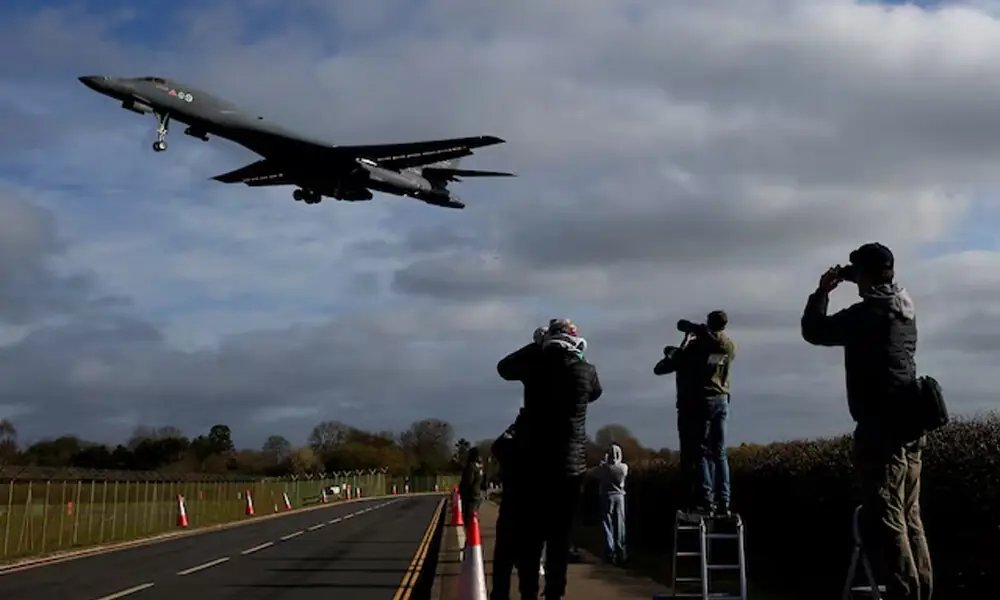
The British government officially authorized the United States on Friday to utilize military bases located on British soil for air strikes against Iranian missile sites. This decision specifically targets facilities used to launch attacks on maritime traffic passing through the vital Strait of Hormuz. Senior ministers gathered at Downing Street to finalize the agreement, which moves the United Kingdom into a more active role within the regional conflict. The authorization is framed as a measure of collective self-defense intended to protect international shipping lanes from ongoing Iranian aggression.
Prime Minister Keir Starmer shifted his position after previously expressing hesitation regarding direct involvement in a war with Iran. The Prime Minister originally turned down American requests for base access, citing the need for strict guarantees regarding the legal framework of such military actions. However, a series of Iranian strikes against various British allies across the Middle East prompted a change in strategy. The government eventually concluded that degrading Iran’s offensive capabilities was necessary to restore regional stability and safeguard global trade routes.
Under the new agreement, American forces will be permitted to launch operations from RAF Fairford in Gloucestershire and the joint US-UK base at Diego Garcia in the Indian Ocean. These strategic locations provide the reach necessary to strike inland Iranian missile batteries that have been targeting commercial and military vessels. While the move strengthens military cooperation between the two nations, British leaders emphasized that the primary goal remains the degradation of specific threats rather than a broader ground invasion. The shift reflects an escalating pressure on London to provide tangible support to its long-standing security partner.
The decision follows significant political friction between the British leadership and the White House over the past several weeks. President Donald Trump had publicly criticized the Prime Minister for what he perceived as a lack of commitment to the coalition efforts in the Middle East. Trump recently described Britain as a disappointment, suggesting the country was no longer the premier ally it once was. This diplomatic tension appears to have played a role in the timing of the authorization, as the UK seeks to repair its standing within the alliance while managing domestic concerns.
Despite the military green light, the British public remains deeply divided over involvement in the conflict. Recent polling indicates that nearly sixty percent of people in the United Kingdom oppose the ongoing offensive actions led by American and Israeli forces. In an attempt to balance these concerns, the statement from Downing Street called for an immediate de-escalation of the war and a swift diplomatic resolution. For now, the focus shifts to whether these targeted strikes will successfully reopen the Strait of Hormuz or lead to further retaliatory cycles in the coming days.
Comments (0)
No comments yet. Be the first to comment!
Leave a Comment