

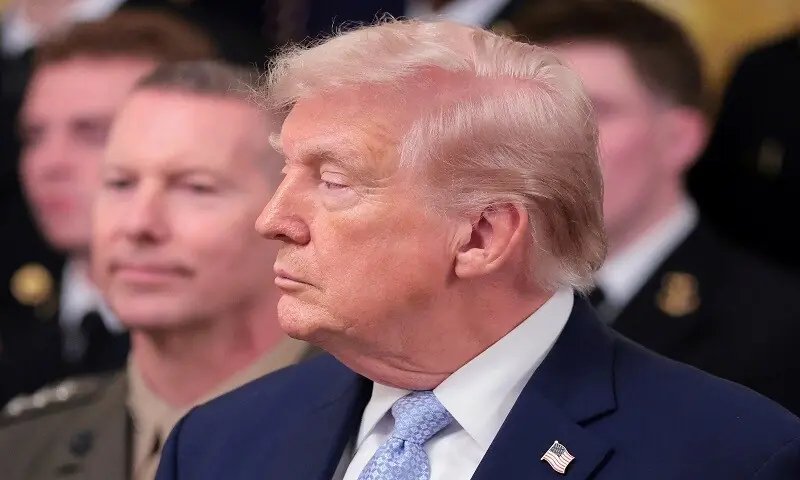
President Donald Trump enters the fourth week of a deepening military conflict with Iran as the situation increasingly moves beyond the administration’s initial expectations. While the White House originally suggested this would be a brief engagement, the reality on the ground has shifted into a volatile struggle with global repercussions. Rising energy costs and a lack of support from traditional international partners have left the United States navigating this crisis largely on its own. The president now faces the difficult task of managing an intervention that contradicts his long-standing promise to avoid foreign entanglements.
The disconnect between official rhetoric and the situation in the Persian Gulf has become more pronounced over the last several days. Trump recently claimed the military phase of the operation was essentially finished, but Iranian forces continue to disrupt vital shipping lanes and launch missile strikes throughout the region. This defiance has squeezed the global oil market and forced the Pentagon to prepare additional troop deployments to stabilize the area. Despite these setbacks, the administration maintains that the campaign is following a strategic plan to neutralize regional threats.
Frustration is mounting within the White House as NATO allies refuse to provide naval support for securing the Strait of Hormuz. Trump has publicly criticized these partner nations, yet their reluctance stems from a desire to avoid being pulled into a war they did not help start. This diplomatic isolation has caught the president off-guard and limited his options for de-escalating the conflict without appearing weak. Internal discussions are now centering on finding a viable exit strategy while the military continues its operations against Iranian infrastructure.
Military officials argue that the campaign has successfully degraded Iran’s capabilities by targeting high-level leadership and sinking much of its naval fleet. From their perspective, the destruction of ballistic missile sites represents a significant victory for American security interests in the Middle East. However, these tactical successes have not yet translated into a broader political or diplomatic resolution. Instead, the persistent nature of the fighting has created a strategic deadlock that experts say is becoming harder for the administration to manage effectively.
The timing of this escalation poses a significant risk to the Republican party as midterm elections approach this November. Lawmakers are struggling to defend the intervention to a public that was promised an end to costly overseas wars. If the conflict continues to drive up domestic fuel prices and requires more American boots on the ground, the political fallout could be severe. For now, the administration remains caught between its desire for a decisive military win and the complicated reality of a region that refuses to be easily pacified.
Comments (0)
No comments yet. Be the first to comment!
Leave a Comment