

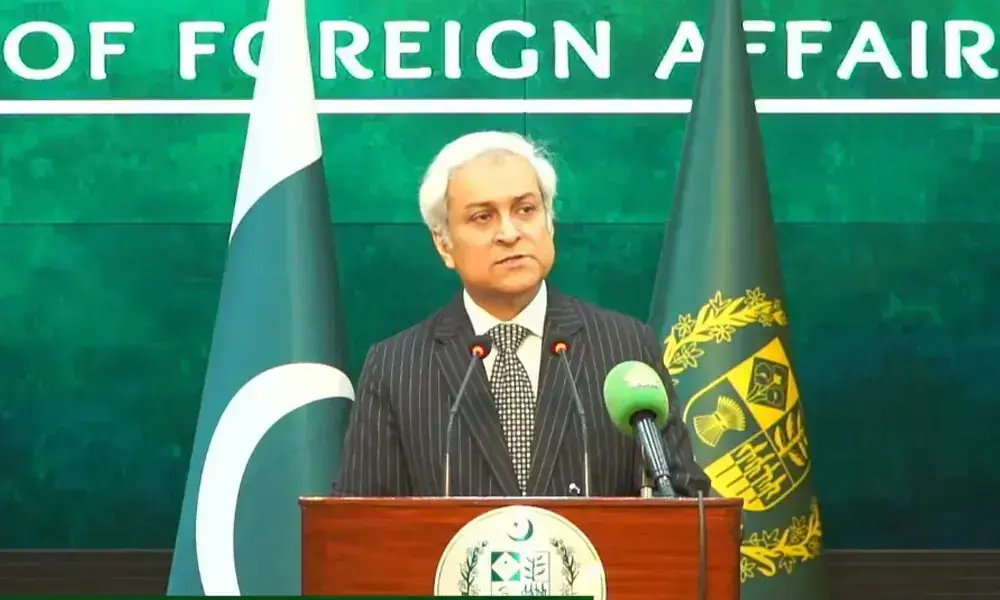
Pakistan officially dismissed allegations from a senior United States intelligence official this Thursday regarding the country’s ballistic missile capabilities and their potential threat to American soil. Foreign Office spokesperson Tahir Andrabi stated that the nation’s strategic arsenal is strictly defensive and intended only to protect national sovereignty while maintaining regional peace. These remarks follow a recent briefing where the US Director of National Intelligence identified Pakistan as a possible risk to the United States homeland. The Pakistani government questioned both the timing and the underlying facts behind such a significant shift in rhetoric from Washington.
During a Senate Intelligence Committee hearing on Wednesday, US officials suggested that Pakistan’s missile technology had evolved to a point where it could theoretically reach United States territory. The Pakistani leadership reacted swiftly to these claims by clarifying that their missile program is not designed for long-range global reach. Andrabi pointed out that the current range of their weaponry stays well below intercontinental levels and is specifically tailored for regional security. This focus aligns with the country’s long-standing policy of maintaining a credible minimum deterrence within South Asia.
The Foreign Office emphasized that Pakistan’s military strategy remains firmly rooted in responding to immediate territorial challenges rather than seeking a global strike capability. Officials noted that the missile program is a necessary response to the shifting security landscape in the immediate neighborhood and serves as a tool for stability. By keeping the range limited, Pakistan argues it demonstrates a commitment to a non-aggressive posture toward countries outside its direct geographic sphere. The government maintains that its strategic assets are under a robust and secure command structure that meets international standards.
In a direct comparison, Pakistani officials highlighted that other nations in the region are developing missile systems with ranges exceeding 12,000 kilometers. They argued that these much larger programs extend far beyond regional security needs and should be the real focus of international concern. Pakistan expressed frustration that its own limited deterrent is being scrutinized while more expansive programs in South Asia receive less criticism. The spokesperson suggested that a fair assessment of regional dynamics would show that Islamabad is the party exercising restraint in its technological development.
Moving forward, Pakistan has called for a more balanced and fact-based dialogue with the United States to avoid misunderstandings regarding its defense policies. The Foreign Office urged Washington to adopt a measured approach that respects the strategic realities of South Asia instead of relying on inaccurate assessments. Islamabad remains open to constructive engagement and hopes that future intelligence reports will reflect a more nuanced understanding of regional stability. Both nations are expected to continue high-level diplomatic exchanges to address these security concerns and prevent further strain on their bilateral relationship.
Comments (0)
No comments yet. Be the first to comment!
Leave a Comment