

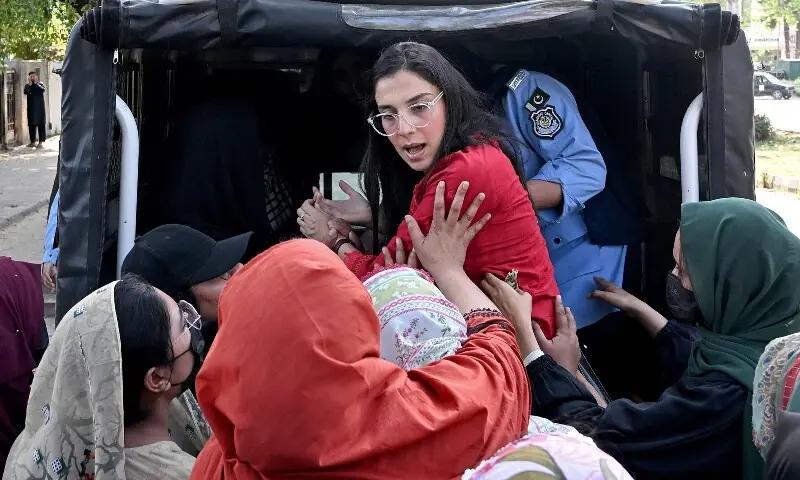
An International Women’s Day march in Islamabad took a troubling turn when sociologist and activist Mavra Bari, along with over 30 others, including women, men, and children, were detained for 12 hours. Bari described the experience as being held in a “horrible prison” where they were allegedly beaten. The ordeal took place in cramped and unsanitary conditions, leaving detainees visibly shaken and some with visible signs of ill-treatment upon their release, according to an eyewitness journalist.
While Prime Minister Shehbaz Sharif publicly affirmed his government’s commitment to women’s empowerment on the same day, human rights organizations have raised alarm bells about a growing trend of arrests aimed at suppressing free speech and the right to peaceful assembly in Pakistan. These groups point to a shrinking space for dissent, with authorities reportedly employing arbitrary detention, excessive force, and restrictions on public gatherings to quiet critical voices.
The detentions are often carried out without clear explanations for those arrested, deepening concerns about due process. Human rights watchdogs have documented numerous instances of intimidation, forced disappearances, and legal harassment targeting activists, lawyers, and journalists. This pattern suggests a broader strategy to undermine voices advocating for equality or those associated with opposition movements, while allowing state-aligned groups to operate unhindered.
Digital rights activist Usama Khilji highlighted the broad interpretation of national security by the state, enabling widespread punishment for perceived transgressions. He cited the cases of human rights lawyer Imaan Mazari and her husband Hadi Ali Chattha, who received lengthy prison sentences for alleged “anti-state” social media posts. Additionally, journalist Sohrab Barkat has been detained since late last year without trial, accused of spreading “derogatory remarks” and misinformation.
These events underscore a worrying climate for civil liberties in Pakistan, where peaceful expression and activism increasingly face repercussions. The fear among rights groups is that such arrests are not isolated incidents but part of a deliberate effort to stifle public discourse and limit fundamental freedoms. The situation suggests a disconnect between official pronouncements on rights and the reality faced by citizens and activists on the ground.
Comments (0)
No comments yet. Be the first to comment!
Leave a Comment