

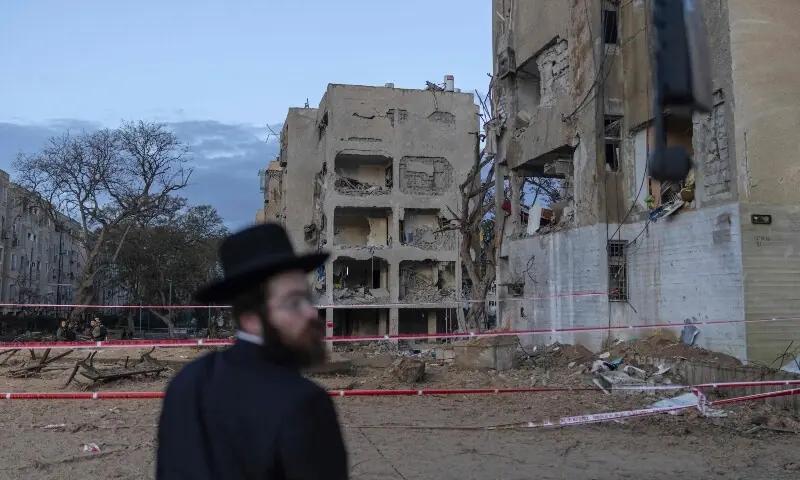
Southern Israel experienced a significant attack on Saturday when two Iranian missiles struck, injuring over 100 people. This marks the most severe assault during the ongoing three-week conflict. The strikes caused considerable damage, tearing through residential buildings and leaving large craters in the ground. Prime Minister Benjamin Netanyahu swiftly promised a forceful retaliation, stating it would be on “all fronts.” First responders reported numerous injuries across different locations, highlighting the widespread impact of the bombardment. The situation escalated tensions significantly in the region.
In the town of Arad, emergency services treated 75 individuals, with 10 sustaining serious injuries. Earlier in the day, 33 people were wounded in Dimona, a city known to house a facility believed to be the Middle East’s sole nuclear arsenal, though officially unconfirmed by Israel. Video footage from Dimona revealed a substantial impact crater adjacent to debris and mangled metal. The Israeli army confirmed a direct missile hit on a building in Dimona, with casualties also reported elsewhere, including a young boy in critical condition from shrapnel wounds.
Iran stated that the targeting of Dimona was a direct response to recent Israeli actions against its Natanz nuclear facility. The attack on Natanz, which is central to Iran’s uranium enrichment program and houses underground centrifuges, had previously caused damage. Following that incident, the head of the UN’s nuclear watchdog urged both sides to exercise military restraint to prevent any risk of a nuclear accident. Israel’s military, when questioned about the Natanz facility, claimed no knowledge of a strike.
Further complicating the regional picture, the United Arab Emirates reported aerial attacks on Saturday, shortly after Iran issued a warning against allowing strikes from UAE territory targeting disputed islands near the Strait of Hormuz. This waterway is a critical chokepoint for global crude oil trade. Meanwhile, the US Central Command announced its forces had targeted an underground Iranian facility storing anti-ship cruise missiles near the Hormuz base, demonstrating an active response from international powers.
The destructive missile strikes in Israel followed three weeks of intense Israeli-US bombardment that had seemingly little effect on Iran’s capacity for retaliatory attacks across the region. The events underscore the escalating nature of the conflict and the potential for wider regional instability. The coming days will likely see further diplomatic maneuvering and potential military responses as each side assesses the consequences of these recent engagements.
Comments (0)
No comments yet. Be the first to comment!
Leave a Comment