

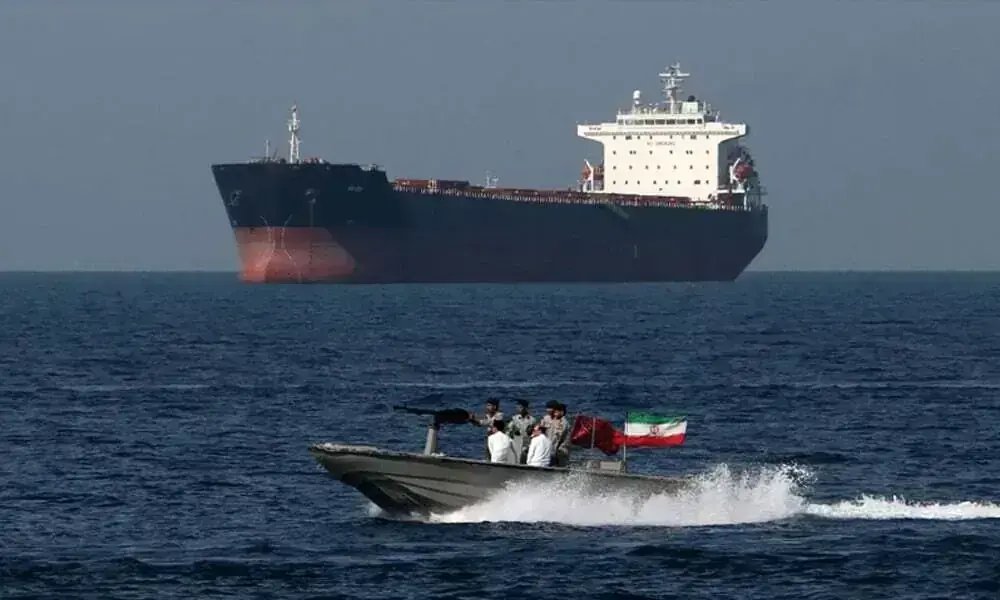
Iran’s representative to the UN’s maritime agency stated Sunday that the vital Strait of Hormuz remains open for passage, with the exception of vessels associated with “Iran’s enemies.” This declaration follows a recent threat from U.S. President Donald Trump, who warned of targeting Iranian power plants unless the waterway was fully accessible within two days. The U.S. military, however, has assessed that Iran’s threat to the strait has diminished.
The narrow strait, crucial for roughly one-fifth of global oil and liquefied natural gas shipments, has seen reduced traffic due to fears of Iranian attacks amidst the ongoing U.S.-Israeli conflict. This situation poses a significant risk to global energy supplies, potentially triggering a widespread energy shock. Iran maintains that diplomacy is its preferred course of action but emphasizes the need for an end to aggression and the building of mutual trust.
Ali Mousavi, Iran’s UN representative, expressed Tehran’s willingness to collaborate with the International Maritime Organization to enhance maritime safety and protect seafarers within the Gulf region. He clarified that ships not connected to “Iran’s enemies” could navigate the strait provided they coordinate security and safety measures with Iranian authorities. This offer suggests a conditional openness to international maritime traffic.
Mousavi pointed to Israeli and U.S. attacks against Iran as the fundamental cause of the current instability in the Strait of Hormuz. He stressed that a comprehensive cessation of hostilities, alongside the establishment of genuine trust and confidence between nations, are paramount for de-escalating tensions. These remarks underscore Iran’s perspective on the geopolitical factors influencing the strait’s accessibility.
The situation highlights the complex interplay of geopolitical tensions and global commerce centered around this critical maritime chokepoint. While Iran asserts control by defining who can pass, the underlying threats and counter-threats continue to create uncertainty for international shipping and energy markets. Further developments will likely depend on diplomatic efforts and the trajectory of regional conflicts.
Comments (0)
No comments yet. Be the first to comment!
Leave a Comment