

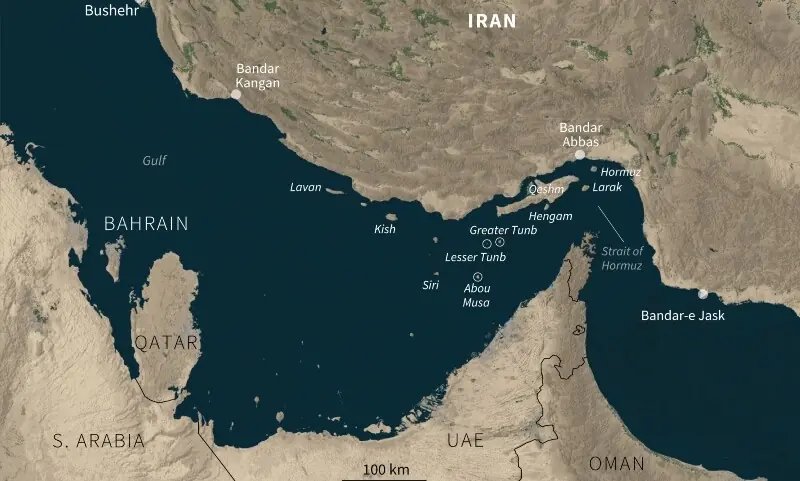
Leaders from several European nations and Japan have declared their willingness to help guarantee secure passage for commercial ships through the critical Strait of Hormuz. This joint statement signals a unified front against recent disruptions that have significantly impacted vital global shipping lanes. The countries involved expressed their commitment to contributing to efforts aimed at restoring stability and ensuring vessels can navigate the waterway freely.
The Strait of Hormuz, a narrow waterway connecting the Persian Gulf to the open ocean, has seen its traffic severely hampered by escalating regional conflict. The situation worsened following military actions that led to retaliatory measures, including attempts to restrict access to this essential chokepoint. These developments have created a climate of uncertainty and danger for international maritime trade.
A significant number of commercial vessels, including oil tankers, have reportedly been targeted or involved in incidents in the Gulf region since early March. While some attacks have been attributed to specific groups, official confirmations from international bodies remain pending on certain claims. These incidents underscore the growing risks faced by shipping in the area.
The participating nations strongly condemned the recent aggressions against unarmed commercial ships and civilian infrastructure, such as oil and gas facilities. They specifically denounced actions that amount to a de facto closure of the Strait of Hormuz by Iran. Such interference with international shipping is viewed as a direct threat to global peace and security.
In their statement, the leaders urged Iran to immediately cease all hostile actions, including threats, mine-laying, and drone or missile attacks aimed at blocking commercial traffic. They called for full compliance with relevant United Nations Security Council resolutions. The implications of these actions, they warned, extend globally, disproportionately affecting vulnerable populations.
Emphasizing the foundational importance of free navigation, the countries reaffirmed this principle as a cornerstone of international law, consistent with the UN Convention on the Law of the Sea. They highlighted that any interference with international shipping constitutes a threat to global stability. An immediate and comprehensive halt to attacks on civilian infrastructure was also demanded.
Addressing concerns about energy security, the statement welcomed the International Energy Agency’s move to release strategic petroleum reserves. The participating nations pledged to implement further measures to stabilize energy markets, ensuring a reliable supply. This coordinated approach aims to mitigate the economic fallout from the disruptions.
Comments (0)
No comments yet. Be the first to comment!
Leave a Comment