

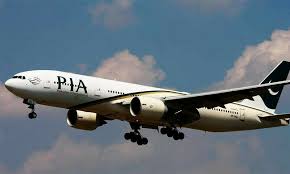
In a landmark development that could reshape the future of Pakistan’s aviation industry, the European Union (EU) has officially lifted its ban on Pakistan International Airlines (PIA). The announcement, delivered in the Senate today, clears the path for PIA to resume long-awaited direct flights to Paris and, in the near future, other European destinations.
The news has been welcomed by government officials, aviation experts, overseas Pakistanis, and industry analysts, all of whom see this decision as a turning point in the national airline’s turbulent history.
Background: From Suspension to Reform
The EU ban, first imposed in July 2020, followed the tragic Karachi plane crash and subsequent revelations about irregularities in pilot licensing within Pakistan. These concerns prompted the European Union Aviation Safety Agency (EASA) to suspend PIA’s authorization to operate in European airspace, citing serious safety and regulatory compliance issues.
The ban left PIA unable to operate on lucrative European routes, forcing passengers to rely heavily on connecting flights through Middle Eastern and Turkish carriers. For the airline, the financial implications were severe, stripping away vital revenue streams at a time when PIA was already struggling with debt, declining service standards, and fierce global competition.
Since then, the government of Pakistan and the Civil Aviation Authority (CAA) have undertaken significant reforms:
- Pilot License Verification: A thorough review and revalidation of pilot licenses to ensure transparency and international trust.
- Safety Management Systems: Strengthening safety protocols in line with International Civil Aviation Organization (ICAO) standards.
- Structural Reforms: Modernization of operational systems and restructuring of management practices.
These steps have gradually rebuilt confidence among global regulators, paving the way for the EU’s reversal of its decision after five years.
What the Lifting of the Ban Means
1. Route Restoration and Convenience for Passengers
The resumption of Islamabad–Paris flights represents not only the reopening of a vital route but also a significant convenience for thousands of overseas Pakistanis living in France and neighboring EU countries. For years, these passengers had to endure longer, costlier travel via transit hubs like Dubai, Doha, or Istanbul. Direct connections will now save both time and money.
2. Financial Relief and Recovery for PIA
PIA’s exclusion from Europe meant the loss of millions of dollars in annual revenue. With the EU’s decision, the airline will recover high-demand routes, boost passenger volumes, and generate fresh revenue streams, offering much-needed financial breathing space as it works toward long-term restructuring.
3. Rebuilding Global Image
The decision also serves as a symbolic victory for PIA’s reputation. Once hailed as one of the world’s premier airlines, PIA’s global image has been tarnished by safety concerns, poor governance, and operational inefficiencies. Resuming European operations demonstrates to the world that Pakistan’s flag carrier is once again aligned with international aviation safety standards.
Wider Impact: Aviation, Economy, and Diplomacy
The EU’s move carries broader implications for Pakistan’s economy and foreign relations.
- For Aviation: The restoration of routes enhances connectivity between Pakistan and Europe, benefitting trade, tourism, and cultural exchange.
- For Overseas Pakistanis: Millions of expatriates in Europe will now have direct, reliable access to their homeland.
- For Diplomacy: The decision underscores international confidence in Pakistan’s regulatory reforms, strengthening the country’s credibility in global aviation forums.
- For Privatization Efforts: The government’s ongoing plans to privatize PIA will gain momentum, as a stronger international presence improves investor confidence.
Challenges Ahead for PIA
While the lifting of the ban is cause for celebration, challenges remain:
- Operational Readiness: PIA must ensure that its fleet is ready to meet international demand with modern, reliable aircraft.
- Sustained Compliance: Continuous adherence to global aviation standards is vital to avoid future setbacks.
- Customer Experience: Beyond regulatory clearance, PIA must focus on improving service quality, punctuality, and passenger satisfaction to compete with world-class airlines.
Aviation analysts stress that this is a second chance for PIA, and seizing it will require not just compliance, but innovation and transformation.
Conclusion: A New Chapter for PIA
The EU’s decision to lift its ban marks more than just the reopening of a flight route it symbolizes a new chapter in the story of Pakistan’s national airline. It represents years of corrective measures, a renewed commitment to safety, and the resilience of a nation that refused to give up on its flag carrier.
For PIA, the opportunity is monumental: to reclaim its position in international skies, restore the trust of passengers, and serve as a source of pride for Pakistan. For the country, it is a reminder that reforms, persistence, and global cooperation can yield results that benefit both the people and the economy.
As flights to Paris prepare to take off once again, the skies hold not just passengers, but the hopes of an airline seeking revival and a nation striving for progress.
Comments (0)
No comments yet. Be the first to comment!
Leave a Comment